
Standard vs. Condensing Tankless: Choose by the Venting
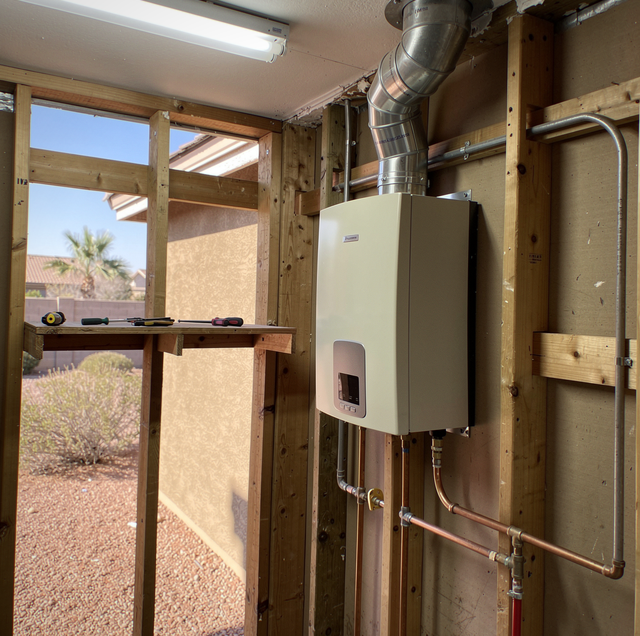
The vent pipe leaving your tankless water heater is the part of the installation you will still see years after the unit itself stops holding your attention. On one kind of gas tankless heater, that pipe is stainless steel. On the other, it is plastic.
The material fixes the route the vent can take, the wall or roof it leaves through, and how much of your ceiling a crew opens to run it. Your house may make that easy or awkward, and you find out which at the survey.
The efficiency figure on the carton is the first number you will compare, and you will forget it a week after your hot water is running. The vent above your head is the one you keep.
Both Units Burn Gas and Only One Cools the Flue
Both machines are gas tankless heaters. A tap opens, a burner lights, and water picks up heat as it passes through an exchanger. The split sits downstream of that, in the exhaust. Non-condensing models expel exhaust gases at high temperatures. Condensing models capture and reuse heat from those exhaust gases instead.
Cooled far enough, a stream of combustion gas stops being gas. Water vapor that leaves the burner as exhaust condenses on the metal it touches, and the heat released by that change is the efficiency the second design sells. What you choose between, though, is a vent material, not a rating. Your house will meet one of those every year, and you will meet the other once.
Stainless Steel on One Unit and Plastic on the Other
Non-condensing models expel exhaust gases at high temperatures, which typically requires stainless steel venting. Condensing models run cooler exhaust and use PVC venting instead of metal, which often simplifies installation.
Stainless steel asks your house for something plastic does not. It is rigid and jointed, and it holds the heat it carries, so it requires clearance from framing and stored goods along the entire run. PVC is light enough for ordinary supports and joins with solvent cement. Where the run has to cross your finished ceiling, the difference shows up as drywall dust in your hallway.
Never re-use a tank heater's old vent for a tankless unit or lengthen one yourself; have the installer size the vent and match its material, because the wrong vent can put combustion gases indoors.
What the Second Heat Exchanger Is There to Do
A non-condensing unit runs water through an exchanger sitting over the burner, takes whatever heat it can in that single pass, and sends the rest up the vent, hot enough to stay a gas. A condensing unit adds a second exchanger downstream of the first, along the exhaust path, and routes the cold supply water through it before it reaches the burner section. The exhaust gives up heat to water colder than anything the primary exchanger ever sees, and it leaves your cabinet cooler for it. That fall in flue temperature is the whole of what the word condensing names on the box you are choosing from.
Cooler exhaust is the point of the design and its complication. Gas that has given up that heat cannot stay dry on the way out of your house, and the pipe must allow for it.
That safety case comes down to ventilation. An installer's knowledge of the ventilation requirements specific to condensing models is what safeguards against moisture-related issues, which is a careful way of saying that the pipe above your ceiling carries water as well as gas, and that your installer has to build and pitch it for both duties before you run a tap.
Which Vent Route Will Your House Allow?
The route question belongs to the site walk, and it comes first. A proper consultation includes evaluating the current venting system and determining whether upgrades are necessary. Many older homes are already set up for gas venting, which makes a non-condensing installation easier. A house with a usable flue chase is a different job from one without.
A crew looks for a clear path to an outside wall or a roof, room for the pipe to rise or fall as its material requires, and clearance around the termination. Whether your house gives you that on the stainless side, the plastic side, or both is not a question a brochure closes.
The Acidic Water the Cooler Exhaust Leaves Behind
Cool combustion gas past the point where its water vapor turns liquid, and the liquid has to go somewhere. It has spent its entire short life among combustion products, leaving it mildly acidic rather than neutral. That makes the condensate drain a service item in its own right: servicing a condensing unit includes testing the condensate drain and checking the pH of the condensate to protect drain pipes from acidic discharge. Testing the pH of a discharge indicates it is not plain water.
That same servicing covers the drain itself: technicians inspect the drain lines for proper slope and any signs of blockage or corrosion, and clean the condensate trap to prevent debris buildup that could cause system backups. A trap, a fall, a length of pipe, and a place for it to end: a condensing installation is tied to the house's drainage as firmly as to the gas and the vent. None of that is homeowner work. The trap and the line belong to whoever installed them and to whoever services them next, and your part is knowing they exist.
The chemistry explains the pipe. Stainless steel on a non-condensing unit is there because the exhaust is hot. Plastic on a condensing unit is there because the exhaust is wet and slightly sour, and because a plastic that does not care about either will outlast a metal that does. Two materials, two different reasons, and neither one gets printed next to the efficiency percentage that sold you the machine. Both reasons end up in your house whichever unit you take, and only one of them is visible from the floor.
Placement, Clearance and the Room Each Unit Needs
Neither cabinet is a large object. These wall-mounted units cover less than 10 square feet, whether condensing or not, and hang in the same sort of space. Footprint is rarely the constraint in your garage or your utility room.
The wall is chosen by what has to reach the unit. A hot metal vent requires its clearance to be held all the way to the termination. A condensing unit needs a drain it can fall into without a pump, and a wall that meets one requirement will not automatically meet the other.
Gas Line and Vent Are One Job on Either Unit
Installation for either type involves upgrading gas lines if necessary, installing proper venting systems, and integrating with existing plumbing. That part of the job is identical either way, which means the gas side is not where the two types part company. It is also the half of the job you do not touch, regardless of which unit you buy.
Why a tank heater's existing gas line is so often too small for a tankless unit, and how tankless venting differs from a tank's, are separate questions from the one this comparison answers.
The Extra Connection at the Bottom of the Box
With both covers off, the two cabinets are nearly the same object: gas in, cold in, hot out, power, and a vent leaving the top. One fitting separates them, and it sits on the underside of your condensing unit.
That single outlet ties the machine to a third system in your house. A standard unit is tied to the gas line and the vent. A condensing unit is tied to the gas line, the vent, and the drain. The fitting is a short plastic stub, and it is the difference between two trades and three.
Frequently Asked Questions
Both of them, on footprint alone. What rules a closet out for you is rarely the cabinet. It is the vent termination and the service clearance your technician needs in front of the unit, and a closet that swallowed your old tank heater does not always give you either one.
It simply stops. Codes related to condensate disposal are among the issues that bring a technician out to a condensing unit. A unit that cannot clear its own liquid shuts itself down. What you get is no hot water and a code on your panel. A spotless heat exchanger will not save you, because the fault is in your drain, not in your heater.
About an hour, by the published windows for each. A condensing install is quoted at four to six hours depending on venting and gas-line updates. A non-condensing install is quoted at three to five hours depending on gas and venting modifications. Both are marketing figures, so plan your day around them and do not hold your crew to a clock on your wall.
That range is a marketing claim, not an independent rating, since it is published to sell you the product. Nothing in it turns on the vent material, so it will not choose between the two types for you. What shortens either unit in a hard-water region is the condition of your heat exchanger, and your plumber can already assess that on your first visit.
Treat it as a new vent until your installer says otherwise. A condensing unit sends cooler, wetter exhaust into a pipe designed for hot, dry gas, and it generally requires a sealed air intake alongside the exhaust; air intake filters are considered essential for proper combustion in condensing units. Your old flue is a single pipe where the new machine may want two, and the fall of your run now matters to you as much as its diameter does.
No, the service lists differ. Regular maintenance on a condensing unit includes cleaning the heat exchanger, inspecting the burner, and checking for any signs of wear or corrosion. Standard service on a non-condensing unit includes flushing the system to prevent mineral buildup, inspecting the burner for wear or damage, and checking the venting to prevent blockages.
Only the burner inspection appears on both lists. What your unit actually needs depends on which type you own, so confirm which list applies before you book your visit, and have the plumber walk you through the list that belongs to it before work starts.
Booking a site survey before a model is chosen puts the vent route, the drain fall, and the gas connection in front of a licensed plumber, while all three can still change —the only stage at which the condensing question is still open. Norfleet Family Plumbing serves Mesa and the East Valley. Call (480) 681-1764.
