A house's drains look separate at the fixture, but past the trap under each one, they join. Every sink, tub, shower, and toilet ties into a branch line, and the branches meet a single main line that carries everything out to the sewer connection. A clog in a fixture's own trap or branch affects only that fixture. A blockage on the shared side of that junction affects everything feeding into it, and that is why several drains giving trouble at once points somewhere other than any one of them.
Which drain backs up first, and how, pairs with a place along that shared line:
| Pattern | What It Means |
|---|---|
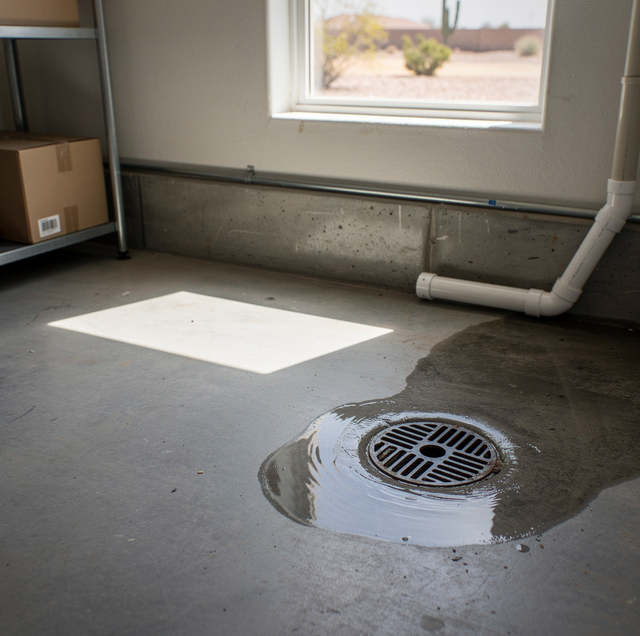
| The lowest fixtures go first: a basement floor drain, a ground-floor tub or shower | A blockage or damage downstream is holding back everything feeding into it from above |
| A toilet gurgles or bubbles when a sink or washing machine drains nearby | A blockage downstream is displacing air through the shared line and finding the easiest path out |
| Water rises in a tub or floor drain when a toilet is flushed | The same line is affected; displaced water and air are returning through the nearest open trap |
| Only fixtures on one side of the house are affected | The problem sits on that branch, not on the main line everything shares |
Find the outdoor cleanout, a capped pipe stub near the foundation or in the yard, and clear plants or stored items away from it without opening the cap. The crew clearing the line works from that fitting first.
Stop Adding Water to the Line
The first move costs nothing and buys time: stop putting water into any drain until you know where the trouble sits. Turn off any running tub or hose, and hold off on laundry, dishwashing, or showering until the line has been checked. Every gallon added while a shared line is blocked has to go somewhere, and the lowest, least protected drain in the house is where it comes back out.
Backed-up water from a shared drain line carries sewage bacteria. Keep children and pets out of the affected room, do not touch anything that has been soaked with bare hands, and do not pour any chemical opener down the drain; a plumbing crew will clear the line.
Where the Main Line Runs and Why the Lowest Drains Show It First
Inside the house, every branch line slopes toward one main line, which leaves the foundation and runs underground to the sewer connection. Gravity does the carrying: each pipe is set to fall a fraction of an inch per foot so wastewater moves on its own, without a pump.
A blockage on that main line does not back up evenly. Water finds the lowest opening it can reach and rises there first, which is why a basement floor drain or a ground-floor tub shows a problem before a second-floor sink does. A fixture upstairs sits above the blockage with more line between it and the trouble, so it can keep draining, slowly, even while a lower fixture is already standing full.
A branch that serves just a bathroom or a kitchen carries only what drains into it, while the main line, past the point where the last branch joins it, carries every branch in the house, which is why one blocked stretch between that junction and the street can affect the whole house at once.
That is also why a technician working a backup can start at the lowest drain and ask what else in the house is affected before touching a wrench: the pattern is data, and it narrows the search before any equipment goes into the line.
What Blocks a Shared Line
The shared line blocks in a handful of recurring ways, and each can build out of sight while the drains only slow or gurgle.
Roots: Tree and shrub roots grow toward the moisture inside a sewer line and enter through any gap in a joint, seal, or crack in the pipe wall. Once inside, a root branches and thickens, and over time it forms a mass that catches toilet paper, wipes, and grease until the passage narrows to nothing.
A bellied or collapsed section: A length of pipe that has lost its fall, whether from settled soil, a washed-out bed, or age, sags into a low spot and holds water instead of moving it along. A fully collapsed section is the same problem with no passage left at all.
Grease: Grease poured down a kitchen drain cools and congeals as it moves through the line, building up against the pipe wall at a bend or a low point well past the sink it came from.
A blocked cleanout or fitting: A cleanout is the capped access point built into the line for clearing equipment. A cracked or missing cap lets soil, debris, or roots into the fitting itself, narrowing the one place meant to stay open; a cap paved over or buried leaves no way in to clear it.
Why a Chemical Drain Opener Makes It Worse
A chemical drain opener is built to clear a localized clog in a single trap, not a blockage sitting on a shared line that is already full of standing wastewater. Poured into a backed-up drain, it has nowhere to go, sits in standing water that can splash back at the person pouring it, and puts a caustic chemical into a line a plumbing crew may need to open by hand or run a cable through. A caustic chemical left standing in a blocked line remains in contact with the pipe wall until the line is cleared, rather than flushing through. Skip it: the diagnosis locates the blockage first, and nothing is poured or run through the line until then.
Camera Footage After the Line Opens
A drain machine can cut through a blockage without ever showing what caused it, which is why the line gets a camera after it opens back up, not instead of clearing it. Run from the nearest cleanout. The camera shows whether the trouble is a single dense root mass, a section that has lost its fall and needs to be dug up and regraded, or a damaged fitting that will keep catching debris until it is repaired.
For a backup that has already happened once, that footage also becomes the record of whether the same stretch is likely to cause the next one, and what it would take to stop that.
Clearing the Line vs Repairing It
Clearing from the nearest cleanout removes what is blocking the line right now and can restore flow on the same visit. It fixes the blockage, not the pipe underneath it. A mass that built up over time can come out in a single pass, though a dense root tangle can need more than one pass before the line runs clear again.
Repair addresses what caused the blockage: a bellied section that needs re-grading, a crushed length, or a joint failing so much that roots keep finding their way back in. The camera footage from the clearing visit tells a technician whether the line simply needed clearing or the pipe itself is the reason it blocked, and choosing among the ways to fix a damaged line without full excavation is a separate decision from what happened today.
Frequently Asked Questions
Yes. Every drain system also vents through a stack that lets air into the pipes as water leaves them. If that vent is obstructed, the drains below it pull air through the nearest trap instead, so they gurgle, drain slowly, or siphon a trap dry. Clearing the vent, not the drain, fixes it.
Cutting out the root mass clears the passage, but it does not close the crack or joint gap the roots grew through. Unless that entry point gets sealed or the section relined, new roots can find the same opening and rebuild the mass over time.
Wipes hold together in water where toilet paper breaks apart, so they travel intact until they snag on a root, a joint lip, or a belly, and every wipe that follows catches on the first.
A handheld snake is built for a fixture trap a few feet long. A main line runs dozens of feet at a larger diameter and needs a cable machine with a cutting head matched to that size and to what is blocking it, run from a cleanout built for the job.
A belly is a stretch of pipe that has settled out of its fall and sags below the rest of the line. It holds standing water permanently, and solids in that water settle out and build back up even after a fresh clearing unless the section itself is regraded.
Not necessarily. A partial blockage that breaks apart under pressure can leave debris clinging to the pipe wall, and a new blockage can build on it.
Hire main sewer line cleaning with a camera inspection — the line is cleared from the cleanout, then filmed so the cause of the backup is on record. Norfleet Family Plumbing serves Mesa and the East Valley. Call (480) 681-1764.