
Why Does My Water Take So Long to Get Hot?
You turn the handle to hot, and nothing changes for a while. The water runs cold, then cool, then warm, and by the time it is hot, you have already washed your hands or half-filled the sink. This is a different problem from running out of hot water partway through a shower. Here, the heater works fine and has plenty in the tank. The issue is the trip the hot water has to make to reach you, and how much cooled-off water is sitting in the pipe ahead of it, blocking the way.
Once you see the wait as a delivery problem rather than a heating problem, the causes line up in order of how likely they are.
The Water in the Pipe Cooled Off Between Uses
Start with the cause behind most long waits: distance, plus time. Every hot line running from your water heater to a faucet is full of water even when the tap is closed. After the last use, the water sitting in that pipe gives up its heat to the surrounding pipe and air and cools to room temperature. When you open the tap, that whole column of cooled water has to flow out of the fixture before any water fresh from the heater reaches you. The farther the fixture is from the heater, the longer that column is, and the longer you wait.
That is why the master bath at the opposite end of the house is always the slowest tap, and a sink right next to the water heater is nearly instant. It is not that the far fixture gets weaker water. It is that there is simply more cooled water in the run between it and the heater, and all of it has to clear first.
Bigger or Bare Pipes Hold More Cold Water to Flush
Two things about the pipe itself stretch the wait beyond raw distance. The first is diameter. A wider pipe holds more water per foot, so a run of three-quarter-inch line stores noticeably more cooled water than the same length of half-inch line, and every bit of it has to be pushed out before hot water arrives. Homes plumbed with larger trunk lines feeding a distant bath pay for it in wait time.
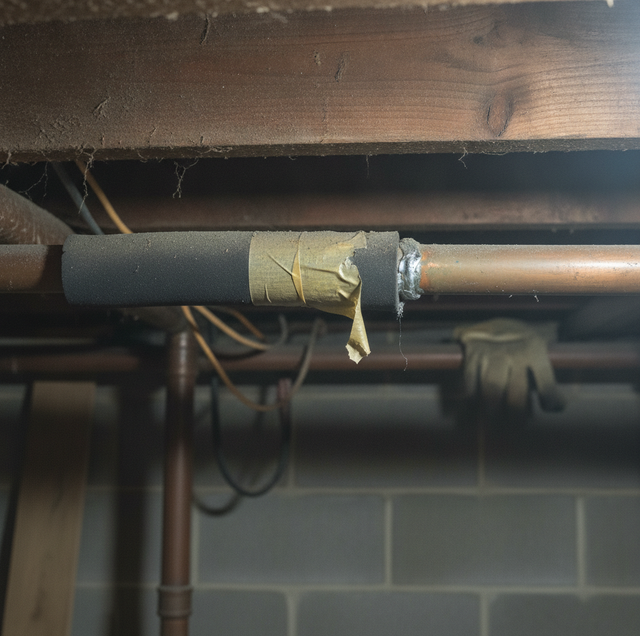
The second is insulation, or the lack of it. Bare copper or PEX loses heat to the surrounding air quickly, so between uses, the water in an uninsulated line cools all the way down and stays there. Foam pipe sleeves on the accessible hot lines slow that heat loss. They do not make the first-thing-in-the-morning wait shorter, but they keep the water in the pipe warm longer between back-to-back uses, so the second person to shower or the dishes you start twenty minutes later get hot water much faster.
Low Flow at the Fixture Makes the Wait Feel Longer
If one particular faucet is slow and the rest of the house is normal, the fixture may be starving. The cooled water in the line clears based on how fast water moves through it, so anything choking the flow at that tap makes the same column of water take longer to purge. The usual culprit is a clogged aerator, the little screen that threads onto the spout tip. In hard-water areas, it accumulates mineral scale and reduces the flow to a trickle. A partly closed angle stop under the sink, or a failing supply valve, does the same thing. Unscrew and clean or replace the aerator, open the shutoff fully, and a fixture that felt slow to heat often speeds right up because the line clears faster.
No Recirculation Loop to Keep Hot Water Waiting Nearby
In a plain plumbing system, hot water only moves when you open a tap. Nothing keeps warm water sitting near the far fixtures, so every use at a distant faucet starts by flushing a cold line. A hot-water recirculation system changes that. It uses a small pump to keep hot water circulating through the pipes, or to push the cooled water in the hot line back toward the heater on demand, so that hot water is already waiting at or near the fixture when you open it. Homes built without one, especially larger or older ones, feel the wait most at the fixtures farthest from the heater. Adding a recirculation setup is the most direct fix for a house where distance is the real problem.
When It Used to Be Fast and Suddenly Is Not: A Crossover
Everything above describes a wait that has always been there. A different pattern points elsewhere: if a fixture used to heat quickly but now takes forever, or never gets truly hot, no matter how long you run it, suspect a crossover. A crossover is cold water leaking into the hot line, usually through a worn cartridge in a single-handle faucet or a failing mixing valve that is supposed to keep the two sides separate. With that seal gone, cold water bleeds into the hot side and dilutes it, so hot water either arrives very late or never fully arrives.
The tell is worth checking yourself. Turn off the water heater's supply for a bit, then turn on a hot faucet. If the "hot" line is drawing water while the heater is isolated, something is feeding it from the cold side. Another sign: the cold line at a fixture slowly turning warm when nobody is running hot. A crossover is a repair, not a wait to live with, and finding which fixture's cartridge or valve is the leak point is the job.
| What you notice | Likely cause | The direction of the fix |
|---|---|---|
| Far fixtures always slow, near ones fast | Distance; cooled water in a long run | Recirculation loop, or a point-of-use heater |
| One fixture slow, rest normal | Clogged aerator or a throttled shutoff | Clean the aerator; open the valve fully |
| Slow to warm even after short gaps | Uninsulated or oversized hot lines | Insulate accessible hot pipes |
| Used to be fast, now slow or never hot | Crossover from a worn cartridge or mixing valve | Repair the faulty faucet or valve |
A Point-of-Use Heater for a Far Bathroom
When one bathroom sits so far from the water heater that no reasonable fix makes the wait short, a small point-of-use water heater installed near that fixture is worth considering. It is a compact unit, tank or tankless, that heats water right at the point it is used, so the cold column in the long run stops mattering for that tap. It does not replace the main heater; it handles the one problem fixture that the layout of the house will never let the main heater serve quickly. For a guest bath or a laundry sink at the end of a long run, it can be simpler than plumbing a whole recirculation loop.
Putting the Clues Together
The wait almost always comes down to how much cooled water sits between the heater and your tap, which is why the farthest fixtures are slowest and why bigger, bare pipes make it worse. If the whole house has always been slow at the far end, a recirculation loop or pipe insulation is the honest fix; if one tap alone lags, look at its aerator and shutoff first. And if the speed changed, going from fast to slow or never quite hot, that is the signature of a crossover and a worn part, not a wait you should accept. Matching the pattern to the cause is what turns a vague annoyance into a specific, fixable thing.
Frequently Asked Questions
There is no single number, but a few seconds at a fixture near the heater and up to roughly half a minute or so at the farthest one is ordinary and comes down to plain distance. The wait becomes a problem worth investigating when it changes: a tap that used to run hot quickly and now takes far longer, or a fixture where the water warms partway and then stalls at lukewarm, points to a fault such as a crossover or a failing part rather than the length of the pipe. Distance gives a steady, predictable wait; a sudden or worsening one is the signal that something broke.
It is the most direct fix when distance is the real cause, and it comes in two broad styles. A timer or continuous pump keeps hot water circulating on a schedule so it is always ready, which is convenient but uses energy keeping the loop warm and, in some designs, warms the cold line. An on-demand system runs the pump only when you press a button or trip a sensor, pushing the cooled water back toward the heater just before you need it, which avoids heating water you are not about to use. Which fits depends on your household's routine and how the home is plumbed.
For a fixture a long way from the main tank, a small point-of-use heater is often the cleanest fix. It is a compact tank or tankless unit installed right at or under that sink or shower, so it heats water on the spot instead of pulling it all the way across the house, and the wait at that fixture nearly disappears. It suits a far powder room, a garage sink, or a kitchen at the opposite end from the tank, and it does not require repiping the whole home. The tradeoffs are the space it needs and a dedicated electric or gas supply at that spot, which a plumber can scope out.
Each fixture has its own wait, set by how far it sits from the heater and how much water its pipe run holds. The kitchen tap ten feet from the tank clears a short column and runs hot almost at once, while an upstairs bath at the far corner has a long line of cooled water to push out first. Pipe size matters too: a fixture fed by a larger-diameter or an uninsulated run holds more cool water and lags more than one on a short, insulated line. So an even spread of fast and slow taps around the house is normal and traces to the plumbing layout, not a malfunction.
A sudden change from fast to slow points to something failing, not to distance, because the length of your pipes did not change. The most common culprit is a crossover from a cartridge or mixing valve that has worn out and started letting cold bleed into the hot line. A water heater that's weakening or a thermostat set to a lower temperature can also make water take longer to reach full temperature. Always-slow is a layout problem; newly-slow is a broken-part problem, and the two get fixed very differently.
No, and this is a common mix-up. The wait is a delivery problem, not a heating one: the water in the tank is already hot, so a larger tank or a higher thermostat only changes how much hot water you have and how hot it is, not how quickly it travels down the pipe to the tap. Turning the heater up can even scald without shortening the wait at all. The fixes that actually cut the wait work on the pipe run instead, a recirculation loop that keeps hot water primed at the fixtures, insulation on the hot lines, or a point-of-use heater out at a distant fixture.
If hot water crawls to your taps or one fixture never warms up, we can find the cause and fix it, from recirculation to a leaking crossover. Norfleet Family Plumbing serves Mesa and the East Valley. Call (480) 681-1764.
