
Hard Water vs. Soft Water: What Changes for Your Plumbing
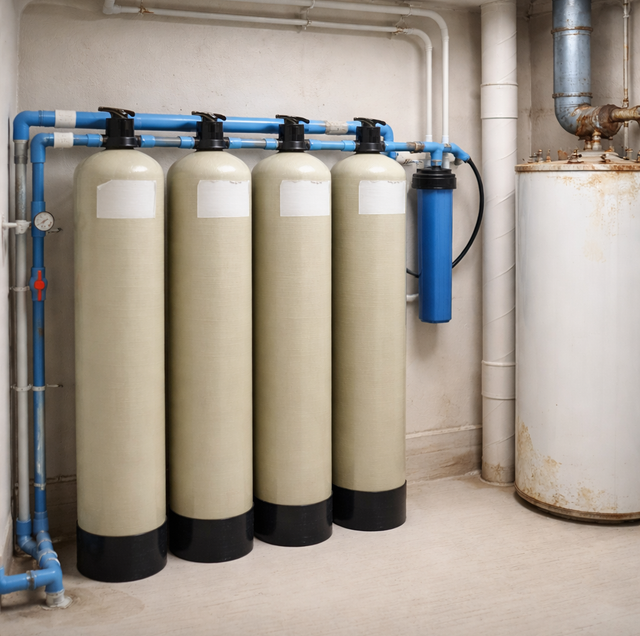
Quick Answer: Hardness is the amount of dissolved calcium and magnesium in your water, measured in grains per gallon. Hard water leaves those minerals behind as scale on pipes, fixtures, and inside your water heater; soft water carries almost none, so it rinses clean and lathers easily. A water softener removes hardness through ion exchange, swapping calcium and magnesium for a small amount of sodium or potassium. A salt-free conditioner is different: it changes how scale behaves but does not remove the minerals. A water test tells you where you stand and how to size a system.
Two houses on the same street can have water that behaves completely differently at the tap. One homeowner fights white crust on the faucets and dishes that never come out clear, while the neighbor barely thinks about it. The difference usually is not the plumbing. It is what the water is carrying before it ever reaches the pipes. Understanding hard water versus soft water starts with one idea: water is rarely just water. It is a solution, and what is dissolved in it decides how it treats everything it touches.
What Actually Makes Water Hard
Rain starts out soft. As it moves through soil and rock, it dissolves minerals along the way, and the two that matter most for plumbing are calcium and magnesium. The more of those a supply picks up, the harder the water. That is the whole definition. Hardness is not dirt, not contamination, and not a sign the water is unsafe to drink. It is a measure of how much dissolved calcium and magnesium the water is carrying.
Plumbers and water tests describe that amount in grains per gallon, often written as gpg. One grain equals about 17 milligrams of hardness minerals per liter, so the number is a direct count of how loaded the water is. The higher the grains per gallon, the more minerals the water deposits everywhere it sits, evaporates, or gets heated.
The Grains-Per-Gallon Scale: General ranges give you a feel for where a supply falls, though testing labs draw the lines slightly differently:
- Soft: under about 1 grain per gallon
- Slightly hard: roughly 1 to 3.5 grains
- Moderately hard: about 3.5 to 7 grains
- Hard: around 7 to 10.5 grains
- Very hard: above about 10.5 grains per gallon
Many homes on hard municipal or well supplies test well into the very hard range, sometimes well above it, which is why scale problems show up so quickly where the water is that mineral-rich. Knowing the number matters because it drives every decision that follows, from whether you need treatment at all to how a system gets sized.
What Hard Water Does Inside Your Home
Dissolved minerals stay invisible while the water is cold and moving. The trouble starts when the water heats up or sits still, because heat and evaporation drive the calcium and magnesium out of solution and leave them behind as a hard, chalky deposit called scale.
Scale in Pipes and Water Heaters: Inside a water heater, scale settles to the bottom of the tank and coats the heating surfaces. That layer acts like an insulating blanket, forcing the unit to work harder and longer to move heat into the water, which quietly raises energy use and shortens the tank's service life. In a tankless unit, the same mineral builds up on the narrow heat exchanger passages and can choke flow until the unit is descaled. Scale also narrows the inside of supply lines over years, the way mineral crust builds inside a tea kettle, gradually reducing the effective diameter of the pipe.
Spots, Film, and Soap That Will Not Lather: Hard water and soap do not get along. The calcium and magnesium react with soap to form a sticky, insoluble residue, the gray ring people call soap scum, instead of a rich lather. You end up using more soap and shampoo to get the same result, and dishes and glasses come out of the dishwasher with cloudy spots and film, which are simply dried mineral deposits left after the water evaporates.
Shortened Appliance Life: Anything that heats or holds water takes the wear: water heaters, dishwashers, washing machines, coffee makers, and ice makers all collect scale on their internal parts and valves. The mineral load makes them run less efficiently and, over enough years, fail sooner than they would on softer water. None of this makes the water unhealthy. It is a maintenance and longevity problem, not a safety one.
What Soft Water Is Like
Soft water carries very little dissolved calcium and magnesium, so it behaves the opposite way. It does not leave a chalky deposit as it dries, which means fewer spots on glassware and less crust building on fixtures and heating elements. Soap lathers freely because there is almost no mineral to react with, so a smaller amount of soap or detergent does more work.
Soft water also feels different, and this surprises people the first time. It can feel slippery or slick on the skin, and that is not a residue. It is the absence of the mineral film that hard water normally leaves behind, so soap rinses off completely instead of clinging. Some people love the feel, and others take a week to get used to it, but it is a normal, expected result of removing the hardness.
How a Water Softener Removes Hardness
A traditional water softener does something clever with a simple trade. Inside the tank sits a bed of small plastic resin beads, each carrying a light electrical charge that holds loosely onto sodium or potassium ions. As hard water flows through the bed, the calcium and magnesium, which the beads grab more tightly, stick to the resin, and the sodium or potassium releases into the water to take their place. That swap is called ion exchange, and it is why softened water is truly low in hardness rather than just filtered.
The resin bed works like a parking lot that only has room for so many cars. Once nearly every space is filled with calcium and magnesium, no more can stick, and hardness would start slipping through. To reset it, the softener runs a cycle called regeneration. It flushes the resin with a strong salt solution, or brine, drawn from a separate tank. The flood of sodium overwhelms the beads and knocks the trapped calcium and magnesium loose, and they wash down the drain. The resin is now recharged and ready to soften again. Most systems regenerate on a schedule or, on smarter units, based on how much water you have actually used.
The Sodium Trade and Low-Sodium Diets: Because ion exchange adds a small amount of sodium to the water in exchange for the hardness it removes, the harder your water, the more sodium the process adds. For most people, the amount is minor, but anyone on a strict low-sodium diet should know it is there. Two common workarounds are running the softener on potassium chloride instead of sodium chloride, or leaving a dedicated cold tap, often the kitchen drinking line, plumbed with unsoftened water for cooking and drinking. A softener install taps into the main water line where it enters the home, so plumbing in that bypass is a job for a professional.
Softener Versus Salt-Free Conditioner
The two are often shopped side by side, but they do different things, and the distinction matters. A softener removes hardness. A salt-free conditioner does not.
A salt-free conditioner, sometimes sold as a descaler or template-assisted crystallization system, uses no salt and no regeneration. Instead of pulling calcium and magnesium out of the water, it changes their form so the minerals are less likely to stick to surfaces as hard scale, and more likely to pass through and rinse away. The minerals are still in the water. Your grains-per-gallon reading does not change. What changes is the behavior of the scale.
That means a conditioner will not give you the slippery feel or the effortless lather of true soft water, because the hardness is still present. What it can do is cut down on scale buildup without adding any sodium and without needing a drain connection or salt refills. For a household that mainly wants to protect a water heater and fixtures from crust but does not want softened water or the sodium trade, a conditioner is a reasonable middle path. For someone chasing the full soft-water experience, only a true ion-exchange softener delivers it.
Testing Your Water Before You Decide
You cannot size or even justify a system without knowing your actual hardness, and guessing from the crust on a faucet is not a number. For a system purchase, a lab or in-home test gives the precise figure a professional needs to match the equipment to your household's size and water use.
Start with a test before sizing or justifying any system. Inexpensive test strips give a rough grains-per-gallon reading in seconds, and many municipal water providers publish an annual water-quality report that lists average hardness for the system.
The test does two things. It confirms whether you actually have a hardness problem worth treating, and it produces the grains-per-gallon number used to size a softener. Hence, it regenerates efficiently rather than too often or not often enough. Because both a softener and a conditioner tie into the main line, sizing and installation belong with a licensed plumber who can confirm the fit and set the system to your water.
Frequently Asked Questions
No. Hardness minerals are calcium and magnesium, the same minerals found in food and supplements, and drinking hard water is not considered a health risk. In fact, hard water contributes small amounts of those dietary minerals. The case for treating it is about plumbing, appliances, and cleaning, not health. If your concern is a specific contaminant rather than hardness, that calls for a different test and a filter, not a softener.
Yes, over time. The same soap-mineral residue that leaves film on dishes clings to fabric fibers, which can leave whites looking dingy and gray, stiffen towels, and gradually wear cloth as embedded mineral grit abrades the weave with each wash. Softened water rinses detergent out more completely, which is why many people find they can cut detergent use by roughly half after installing a softener.
It depends on your hardness and water use, but a typical single-family system goes through roughly one 40-pound bag of softener salt every four to eight weeks. A softener that regenerates based on metered water use, rather than on a fixed daily timer, generally uses noticeably less salt than a timer-only unit because it only recharges when the resin is actually spent.
Only partly, and not reliably. Standard softening resin can capture small amounts of dissolved clear-water iron, but heavier iron loads foul the resin and call for a dedicated iron filter ahead of the softener. The rotten-egg, sulfur smell comes from hydrogen sulfide gas and often from a water-heater anode-rod reaction, not from hardness, so a softener alone usually will not clear it.
Not necessarily. A whole-house softener is plumbed so it treats the interior supply while outdoor hose bibs are often left on hard water on purpose, since lawns and gardens do not benefit from softening and get no value from the sodium. Many installs also leave the kitchen cold tap unsoftened for drinking and cooking, which sidesteps the sodium question at the glass.
The resin bed itself commonly lasts around 10 to 15 years before its exchange capacity fades and it needs replacing, well beyond the salt you add every month. Chlorine in a municipal supply slowly degrades resin over the years, so homes on heavily chlorinated water may see the bed wear out toward the shorter end of that range.
Have your water hardness tested before you buy any system — get the grains-per-gallon number and a right-sized recommendation. Norfleet Family Plumbing serves Mesa and the East Valley. Call (480) 681-1764.
