
Why Is My Hot Water Rusty? 4 Clues That Point to the Cause
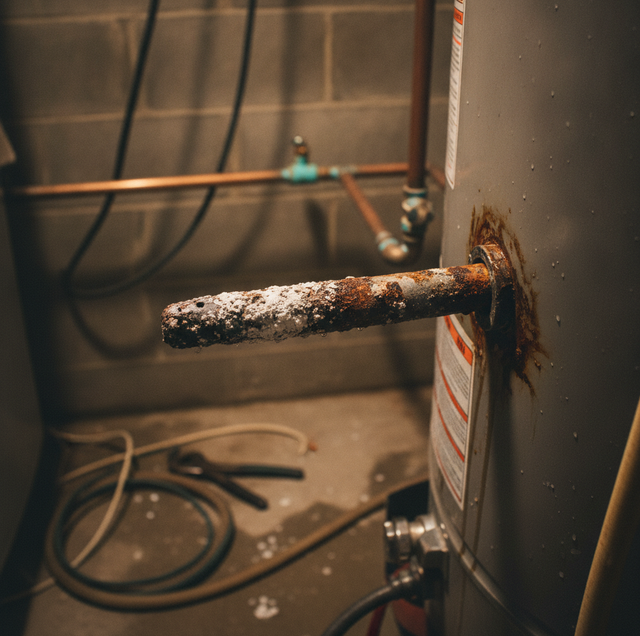
You turn on the shower, and instead of clear water, you get a brown or amber tint, or maybe a cloudy haze that looks like weak lemonade. It is unsettling, and the first question is usually whether the water is dangerous. The more useful question, the one that actually leads to a fix, is a diagnostic one: which tap does it come from, and when? Those two answers narrow the cause down faster than any lab test, because discolored water follows a small set of predictable patterns. Read them correctly, and you can tell whether you are looking at a tired water heater, an aging pipe, or a passing hiccup from the utility.
Quick Answer: Rust in the hot water only usually means the water heater: the sacrificial anode rod is spent, and the steel tank has started to corrode. Rust in both hot and cold points upstream to corroding galvanized pipes or the municipal supply. Water that runs brown for a few seconds then clears is stirred-up sediment, not active corrosion.
Read the Pattern Before You Reach for the Phone
Discolored water is a symptom, and like any symptom, it carries information about where the trouble sits. Two clues do most of the diagnostic work.
The first is which tap? Run the cold-only side of a faucet, ideally one on an outside spigot or a rarely used tap, and watch it. Then run the hot-only side. If only the hot side shows color, the problem is almost certainly downstream of your water heater, meaning the heater itself. Cold water never passes through the tank, so if it comes out clear while the hot runs brown, the tank is the obvious suspect. If both hot and cold run discolored, the water is picking up color before it ever splits toward the heater, which points upstream: your incoming pipes or the water coming into the house from the street.
The second clue is when? Does the color appear the instant you open the tap and then clear after a few seconds of running? Or does it persist no matter how long the water flows? A brief burst that clears means something settled got stirred up. Discoloration that stays put means color is being added continuously, which is the signature of active corrosion or an ongoing supply problem.
Put the two together, and you get a quick map. Hot-only and persistent leans hard toward a corroding heater. Both taps and persistent leans toward aging galvanized pipe. Both taps are clearing within a day, especially if they showed up suddenly, leaning toward the city. First-draw-only that clears leans toward settled sediment in a line or at the bottom of the tank.
Hot Only: The Water Heater Is Talking
When the color lives entirely on the hot side, the water heater is where you look, and the story usually involves a part most homeowners have never heard of.
A conventional tank heater is a steel tank holding forty or fifty gallons of water kept hot around the clock. Hot water and steel are a corrosive pairing, so manufacturers install a defense called the anode rod: a long metal rod, typically magnesium or aluminum, threaded into the top of the tank. Think of the anode as a lightning rod for corrosion. It is made of a metal that gives up electrons more readily than steel, so the water attacks the rod instead of the tank walls. The rod is designed to be sacrificed. It slowly dissolves over the years while the tank stays intact.
The trouble comes when the rod is fully consumed. With nothing left to sacrifice, corrosion turns to the next available metal, which is the steel tank itself. Now the water is in direct contact with rusting steel, and that rust tints the hot water brown. So hot-only discoloration is often the tank quietly announcing that its anode is gone and the tank has begun to corrode from the inside.
There is a second hot-only cause that is less alarming: sediment. Minerals and fine rust settle to the bottom of every tank over time, forming a layer of sludge. When the burner or element fires and the water churns, that sediment can lift and cloud the hot water, especially at the first draw of the day.
Both Taps: Look Upstream
When cold water runs discolored too, the heater is off the hook, and the cause sits before the water splits.
The most common culprit in an older home is galvanized steel pipe. Galvanized plumbing was standard for decades, and it works well until the protective zinc coating inside wears away. Once bare steel is exposed to water, it rusts from the inside out, shedding flakes and staining the water that passes through. Because these are your supply pipes, feeding both hot and cold, the color shows up on both sides. Galvanized corrosion tends to be worse at the first draw, when water that sat overnight in the pipe carries the rust that accumulated while it sat still.
The other both-taps cause is not your plumbing at all. The municipal main can stir up rust when a main breaks, when crews flush hydrants, or when nearby utility work disturbs the line. Older cast-iron mains carry a coating of rust on their inner walls, and any sudden change in flow or pressure can knock it loose into the water headed for your house. This kind of event is temporary. It arrives suddenly, affects the whole neighborhood, and clears within a day or so once the disturbed sediment settles or gets flushed through.
Telling a supply event from a failing pipe is mostly about timing and reach. A supply problem hits both taps, often hits your neighbors too, and clears on its own. A failing galvanized pipe is yours alone, gets gradually worse over months, and does not clear up by itself.
Brown, Cloudy, or White? They Are Not the Same
Color and clarity carry their own clues, and it helps to name what you are seeing before you decide what it means.
Brown, amber, or reddish water is rust, iron oxide picked up from steel somewhere in the system, whether the tank or the pipe. That is the signature of the corrosion cases above.
Cloudy or milky white water is usually a different thing entirely: air. Tiny bubbles suspended in the water make it look cloudy. The easy test is to fill a glass and set it on the counter. If it clears from the bottom up within a minute or two, that is dissolved air working its way out, and it is harmless, common after work on the line or when water is very cold. If instead the cloudiness has a tan or brown cast and settles into a fine layer, you are back to sediment and rust.
Naming the color first keeps you from chasing the wrong cause. Air clearing from the bottom of a glass needs no plumber. Brown water that stains a white sink does.
Why Hard Water Speeds All of This Up
Water chemistry sets the pace of corrosion, and many areas run hard. Hard water is loaded with dissolved minerals, and those minerals make the water more aggressive toward the sacrificial anode. The harder the water, the faster the rod gives itself up, which means a heater in a hard-water home can burn through an anode years sooner than the same heater on soft water. Once the rod is gone, the clock on tank corrosion starts. Hard water also feeds the sediment layer at the bottom of the tank, since the minerals that make water hard are exactly the ones that precipitate out and settle when water is heated. So hard water does double duty: it shortens the anode's life and thickens the sludge, both of which show up eventually as discolored hot water.
What Actually Fixes It
The fix depends entirely on which pattern you found, which is why the diagnosis comes first.
If the problem is sediment in the tank, flushing the water heater clears the loose material. Draining the tank and running fresh water through until it comes out clean removes the sludge layer and often the discoloration with it.
If the anode rod is spent, replacing it is the real repair. A fresh rod restores the sacrificial protection and, caught early enough, can add years to a tank that has only just started to corrode. Checking the rod every few years, and more often on hard water, is the maintenance step that prevents the whole problem.
If the steel tank has already rusted through, no amount of flushing or rod-swapping brings it back. A tank corroding from the inside is on a path toward a leak, and replacement is the answer before it fails and floods.
If the cause is a failing galvanized pipe, the durable fix is repiping, replacing the corroded steel with modern pipe that will not rust. Spot repairs on galvanized lines tend to be temporary because the rest of the run is aging on the same timeline.
And if it is a municipal event, the fix is patience. Run a cold tap for a few minutes to clear the line once the utility reports the work is done, and the water should return to normal.
A Word on Safety
The rust in discolored water is generally not a serious health threat, but a few cautions apply. Do not drink or cook with heavily discolored water. Wait until it clears, or the source is fixed. Rust stains fixtures and laundry, so hold off on washing whites until the water runs clean. Remember that hot water can scald, so take care when running and inspecting hot taps. And leave the hands-on work to a professional: draining a heater, swapping an anode rod, working with the gas or electrical connections on the unit, and repiping a home all carry real risk and are jobs for a licensed plumber.
Frequently Asked Questions
The cleanest confirming test is to run the outdoor hose bib, which is cold and unsoftened, and compare it against the hot side indoors. If that cold spigot runs clear while only the hot comes out rusty, the water heater is confirmed as the source, since cold water never travels through the tank. Reach for this check when the indoor cold taps feed through a softener or a long run of old pipe that might muddy the reading. The hose bib gives you a raw, untreated cold sample to judge against.
Anode rods come in three types, and the type installed changes how the problem unfolds. Magnesium is the most protective and the most common; aluminum-zinc is chosen for hard or smelly water because it resists the reactions that cause rotten-egg odor; and powered impressed-current rods use a small electrical charge instead of sacrificing metal at all. The material governs how fast the rod is consumed and how long it can hold off tank rust before the steel is exposed. Knowing which type is in your tank tells a plumber roughly how quickly to expect it to need attention.
Rust settles at the lowest point of a line or the base of the tank, so the very first draw stirs it up before the water flushes clean. Letting the tap run for a full minute clears it if the cause is just settled sediment rather than active corrosion feeding color continuously. A useful next step is to note whether it returns after the water sits still again overnight, since settled material re-accumulates while active corrosion never really stops. That timing difference separates a harmless nuisance from a tank that is actively rusting.
Many utilities post hydrant-flushing schedules and outage maps on their websites, so checking those or asking a neighbor confirms a supply-side event before you open up your own plumbing. A crew flushing hydrants a few streets over can send discolored water through the whole area for a day. If the map or schedule shows recent work near you and a neighbor sees the same brown tint, you have your answer without touching a wrench. That single lookup can save a needless service call.
The common nuisance is iron staining that leaves rusty marks on laundry, tubs, and fixtures, rather than an immediate danger. A whole-house sediment or iron filter catches particulate rust before it reaches the taps and is a practical add-on where iron is a recurring issue. Even so, heavily discolored water should be avoided for drinking and cooking until the source is found and corrected. Treat a deep brown tint as a stop sign, not a shade of normal.
A good rule is to check the anode every few years and replace it before it is fully consumed, which can add years to a tank by keeping the sacrificial protection intact. Flushing on the same visit clears the sediment layer that builds at the bottom and can cloud the hot water. But once the steel itself has rusted through, no flush and no new rod bring it back, because the wall integrity is already gone. At that stage, the tank is heading toward a leak, and a planned replacement beats an emergency one after it floods.
Have a plumber trace your discolored water to its source before the tank fails — protect your home from a costly leak. Norfleet Family Plumbing serves Mesa and the East Valley. Call (480) 681-1764.
