
Repipe vs Spot Repair: When Patching Pipes Isn’t Enough
A pipe fails behind a wall, a plumber cuts in, replaces the failed section, and patches the drywall back up. Eight months later, another pipe fails in two rooms over. The fix worked both times, technically, yet the underlying question went unanswered: is this a string of unrelated bad luck, or is the whole supply system quietly wearing out one joint at a time? That distinction, more than any single leak, determines whether the next call should be for another patch or for a full repipe.
Two Different Repairs, Two Different Questions
Spot repair answers a narrow question: is this one section of pipe damaged? A plumber isolates the failed joint or run, cuts out the compromised section, and ties in new material at that one location. It's fast, it's contained, and for a single failure in an otherwise sound system, it's the correct answer almost every time.
Whole-home repiping answers a much bigger question: is the pipe material itself the problem? Instead of treating a single failure point, a repipe replaces the supply lines throughout the house with new pipe end to end. It's a bigger job with a longer timeline, and it only makes sense when the evidence points to the material rather than the moment.
Confusing these two questions is where homeowners get stuck paying for repair after repair on a system that was never going to stop failing, because a new joint on old pipe just moves the next failure to a different spot rather than removing the cause.
The Comparison at a Glance
| Factor | Spot Repair | Whole-Home Repipe |
|---|---|---|
| What it addresses | One isolated failure point | The pipe material and its condition throughout the house |
| Relative cost over time | Lower per visit, but repeats add up with every new leak | Higher upfront, but resolves the recurring expense |
| Disruption | Limited to one wall, ceiling, or slab section; usually done in a single visit | Multiple days of access through walls, ceilings, or the slab, plus temporary water shutoffs |
| How many past repairs justify it | Reasonable for a first or second isolated failure | Worth considering once repairs become a pattern rather than an event |
| Pipe material and age | Fine for younger copper or PEX with a single defect | The clear call for aging galvanized steel, polybutylene, or copper riddled with pinhole leaks |
| Long-term reliability | Only as reliable as the untouched pipe around the repair | Every foot of supply line is new, so reliability resets across the board |
Reading the Table: What "Relative Cost" Actually Means
Cost comparisons here are about pattern, not dollar figures, because the honest answer depends on how many times a home has already been down this road. A single spot repair is a modest, contained expense. A second one, a year or two later, is another modest expense. But add up three or four repairs across different rooms over a few years, factor in the drywall, flooring, or ceiling repair that comes with each one, and the running total starts to rival what a repipe would have cost from the start, with the difference that the repipe actually ends the pattern instead of extending it.
That's the real comparison: not "cheap repair versus expensive repipe" but "a series of unknown future expenses versus one known expense that resolves the underlying cause." A homeowner who's had one leak in fifteen years is in a completely different position than one who's had three leaks in eighteen months, even though both are technically choosing between the same two repair types.
Disruption and Timeline: What Each Repair Actually Involves
A spot repair is usually a same-day or single-visit job. A plumber opens one section of wall or ceiling, replaces the damaged run, pressure-tests the repair, and closes it back up. Water is off for part of the visit and back on by the end. Beyond one drywall patch to paint over later, daily life barely notices it happened.
A repipe is a different kind of project. Supply lines run through walls, ceilings, attics, and sometimes under a slab, so getting new pipe to every fixture means opening access points throughout the house rather than at one spot. Water service is interrupted for stretches during the work, and depending on the home's layout and how the original lines were routed, that can mean a few days of coordinated access rather than a single afternoon. It's a bigger disruption, but it's also a one-time disruption rather than a recurring one.
How Many Past Repairs Tips the Scale
No fixed number automatically triggers a repipe, but a pattern is easy to recognize once it's there. One leak, especially one tied to an obvious cause like a nail through a wall or a fitting that was never properly seated, is an isolated event and spot repair is the right call. Two leaks in different areas within a short span start to raise a question. Three or more, especially if they involve the same pipe material or show up in different rooms with no obvious external cause, stop looking like separate incidents and start looking like a single system reaching the end of its service life.
The math shifts because each new repair carries its own opening, its own drywall or flooring patch, and its own labor call, on top of whatever the previous repairs already cost. At some point, the running total of "just one more patch" repairs exceeds what solving the actual cause would have taken, and the pattern of failures keeps going because the pipe causing them is still there.
What the Pipe Material and Age Are Telling You
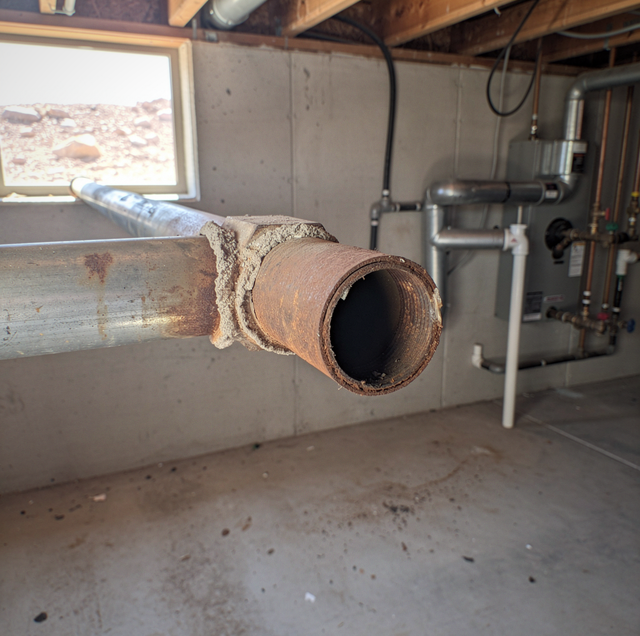
Pipe material carries most of the weight in this decision. Galvanized steel supply lines, common in homes built before copper and PEX became standard, corrode from the inside out. The zinc coating wears away over decades, exposed steel rusts, and mineral scale builds on top of that rust, narrowing the pipe and creating exactly the kind of internal roughness where pinhole leaks start. Once galvanized pipe starts failing in one spot, it's failing at a similar rate everywhere else in the house, since every foot of it has been exposed to the same water and the same amount of time.
Polybutylene, a gray plastic pipe used widely for a stretch in the 1980s and early 1990s, has its own well-known failure pattern: it degrades from chlorine exposure in treated water and becomes brittle from the inside, often with no visible warning before a fitting or a straight run fails outright. A single failed polybutylene fitting isn't a fluke; it's a preview of what the rest of the polybutylene in that house is heading toward.
Copper and PEX age differently and generally hold up much longer, so a single failure in either material, without other nearby leaks, is much more likely to be a true isolated incident: a manufacturing defect, an installation error, or physical damage from something else entirely. Age and material together tell you whether it's one bad joint or one bad pipe run through the whole house.
Corrosion and Discoloration as Early Warning Signs
Beyond counting repairs, the water itself often signals which category a home is in before a pipe ever fails outright. Rusty or discolored water, especially right after the house has sat unused for a few hours, points to internal corrosion in galvanized pipe. A metallic taste that wasn't there before, or water that runs clear after flushing for a minute but then turns discolored every single time, is consistent with scale and rust accumulating along the full length of the old pipe rather than in one isolated section.
Visible green or blue staining around fittings, especially on older copper, points to slow corrosion at the joints themselves, and if it shows up at more than one fitting, it's a sign the corrosion is systemic rather than a one-off. None of these signs on their own demand an immediate repipe, but taken together with a rising repair count and older pipe material, they move the decision from "maybe someday" to "worth a real look now."
Where a Professional Assessment Fits In
The clearest way to distinguish an isolated failure from a system-wide problem is to look directly at the pipe, not to guess based on symptoms alone. A camera inspection or an examination of a section of exposed pipe during a repair visit can show whether corrosion, scale buildup, or brittleness is limited to the failed section or present throughout the run. That kind of look also confirms pipe material where it isn't obvious, which matters since galvanized, polybutylene, copper, and PEX all call for a different answer to the repipe question.
A plumber weighing this decision is really asking a version of the same question every time: is more of this house's plumbing likely to fail the same way, on the same timeline, as what just failed? A single answer of "no" supports another spot repair. A pattern of "yes" makes a repipe the more reliable long-term move, rather than a bigger version of the same repair.
Frequently Asked Questions
There's no universal number, but two or more unrelated leaks within a year or two, especially in older galvanized or polybutylene pipe, is generally the point where a whole-home look makes more sense than treating each leak as its own event. The pattern matters more than the raw count.
Not always. A short burst of discoloration after water has sat unused or right after nearby utility work can be a temporary sediment issue that clears on its own. Discoloration that recurs over weeks or months, especially when paired with a metallic taste, is a stronger signal of ongoing internal corrosion.
Plumbers generally work to minimize the amount of drywall that needs to be opened, often routing new lines through existing access points, attics, or crawl spaces where possible. Some drywall or ceiling access is usually unavoidable, but the amount varies a lot depending on the home's layout and where the original lines run.
Many homeowners with confirmed polybutylene piping choose to proactively repipe once they understand how the material tends to fail, since it degrades from the inside with little warning. It isn't mandatory the moment it's identified, but a known history of that material failing elsewhere is worth weighing against waiting for a failure at home.
Often, yes, especially when the low pressure comes from corrosion or scale narrowing the inside of old pipe. Because a repipe replaces the narrowed pipe with new material at full diameter, homes experiencing gradually declining pressure from aging galvanized lines often see pressure improve once the repipe is complete.
It depends on the size of the home and how the work is staged, but plumbers generally coordinate the work to restore water service at the end of each working day rather than leaving a house without water overnight. Multi-day projects are common, though the house isn't without water for the entire span.
Schedule a whole-home plumbing assessment — find out whether the next leak is isolated or part of a bigger pattern before it happens. Norfleet Family Plumbing serves Mesa and the East Valley. Call (480) 681-1764.
