
Water Softener vs Water Conditioner: Which One Do You Actually Need?
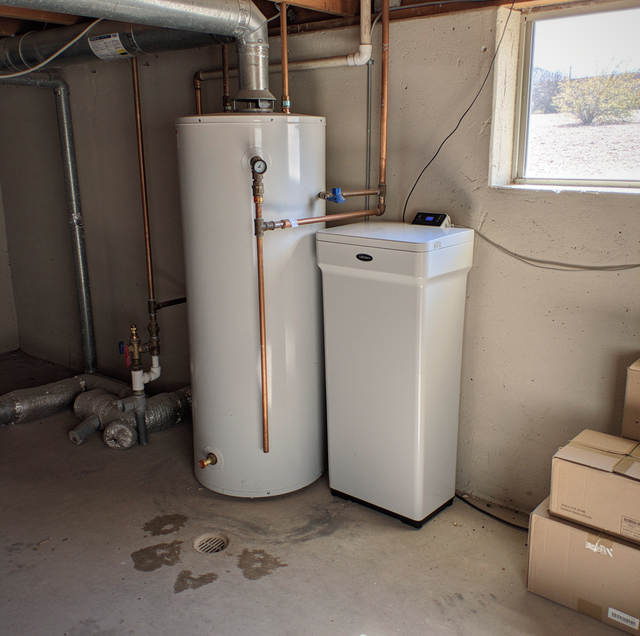
You are standing in front of two spec sheets from two different companies, and both claim to solve the exact same problem: crusty glassware, a showerhead losing pressure, a water heater that seems to work harder than it used to. One sheet describes tanks, salt bags, and a drain line. The other describes a cartridge with no plumbing to a drain at all. A salesperson on the phone insists their option is the modern upgrade. Another insists the older technology is the only one that actually works. Both are technically telling the truth about their own products, which is exactly why the choice feels harder than it should be.
The confusion is not really about which brand to trust. It is that "softener" and "conditioner" are used almost interchangeably in marketing, even though the two devices perform fundamentally different jobs on the water passing through your pipes. One removes hardness minerals. The other leaves them in the water and changes what those minerals do once they're there. Once you separate those two outcomes, the decision becomes much less confusing.
What Hardness Is Actually Doing To Your Plumbing
Every water supply contains some dissolved calcium and magnesium, picked up as the water moves through rock and soil before it ever reaches a pipe. That mineral load is measured in grains per gallon, and the higher the number, the more aggressively those minerals show up as scale wherever water heats up, sits still, or evaporates. Inside a water heater, scale settles on the tank floor and coats heating surfaces, forcing the unit to work harder to transfer heat to the water and quietly shortening the anode rod's lifespan before the tank itself starts corroding. On fixtures, the same minerals dry into the chalky white residue that clings to faucets and glass shower doors.
None of that makes the water unsafe. Calcium and magnesium are the same minerals found in food, and hardness is a plumbing and appliance issue, not a health one. But high hardness left untreated for years does real, cumulative damage to water heaters, fixtures, and anything with a heating element, which is exactly why the softener-versus-conditioner question keeps coming up.
What A True Softener Actually Does
A traditional water softener operates on a process called ion exchange, physically removing hardness from the water rather than just managing it. Inside the tank sits a bed of resin beads that carry a slight charge, and as hard water flows through, calcium and magnesium ions cling to the resin more tightly than the sodium or potassium ions already present. Hardness minerals get trapped on the beads, and sodium or potassium ions take their place in the water. That trade is why softened water tests as truly low in hardness, not just treated to behave differently.
Eventually, the resin bed fills up and can't absorb any more hardness, so the softener runs a regeneration cycle: it flushes the resin with a concentrated brine solution drawn from a separate salt tank, which loosens the trapped minerals and washes them down a drain line. The resin resets and starts softening again. That regeneration cycle is also why a softener needs a drain connection and a steady supply of salt, which most households refill every month or two depending on hardness and water use.
Because it adds a small amount of sodium in exchange for the hardness it removes, a softener is worth a second look for anyone on a strict low-sodium diet, though the amount added scales with how hard the water was to begin with. Many households handle that by leaving one cold tap, often the kitchen line, plumbed with unsoftened water for drinking and cooking, or by running the unit on potassium chloride instead.
What A Conditioner Actually Does
A salt-free conditioner, often built around a process called template-assisted crystallization, takes a completely different approach: it doesn't remove anything. Water flows over a catalytic media coated with microscopic nucleation sites, tiny anchor points that give dissolved calcium and magnesium something to crystallize onto right there in the water stream, rather than on the walls of a pipe or the inside of a tank. Once those minerals form a hard crystal rather than a soft ion, they lose their ability to bond to metal and plastic surfaces, so they are carried along by the flow instead of settling out as scale.
The mineral is still in the water. A test strip after a conditioner will read the same grains per gallon as before treatment, because nothing has been extracted. What changes is behavior, not content: calcium and magnesium pass through fixtures, appliances, and pipe walls rather than clinging to them. There's no resin to regenerate, no salt to refill, and no drain line to install, which is a major part of the appeal for households that want less scale buildup without adding equipment or plumbing upkeep.
That also means a conditioner will never produce the slick, soap-lathers-instantly feel of truly soft water, because the hardness minerals are still present and will still react with soap the same way they always have. A conditioner protects surfaces from scale. It does not change how the water feels or how far a bar of soap goes.
Softener vs Conditioner: Side By Side
| Dimension | Water Softener (ion exchange) | Water Conditioner (template-assisted crystallization) |
|---|---|---|
| How it works | Swaps calcium and magnesium for sodium or potassium via resin beads | Converts dissolved minerals into inert crystals that won't stick to surfaces |
| Effect on scale | Scale-forming minerals are removed; scale buildup drops sharply | Minerals stay in the water but no longer bond to surfaces; buildup drops without removal |
| Effect on soap and skin | Soap lathers freely; skin can feel slick or slippery after rinsing | No change to lather or skin feel; minerals still react with soap as before |
| Maintenance and salt refills | Requires periodic salt refills and a drain line for regeneration cycles | No salt, no regeneration cycle, no drain connection needed |
| Best-fit hardness range | Moderately hard to very hard water where full softening is the goal | Any hardness level where the priority is scale protection, not a texture change |
Where A Softener Makes More Sense
If the water is testing well into the hard or very hard range and the household is dealing with heavy scale on multiple fixtures, a shortened water heater lifespan, or spotting that survives a full dishwasher cycle, a softener addresses the root cause by actually pulling the mineral load down. It's also the only option that delivers the texture change some households specifically want: a slicker feel on skin, reduced soap and detergent use, and streak-free glassware without extra rinse aid. Anyone whose main goal is to protect a tankless or tank water heater's internal components from mineral buildup over years of use will get the most direct benefit from a system that removes hardness rather than just redirects it.
Where A Conditioner Makes More Sense
A conditioner fits a narrower but real use case: households that want to cut down on scale forming in a water heater and on fixtures but don't want a system tied to salt bags, a drain connection, or the added sodium. It's a reasonable middle path for anyone who's decided the softened-water feel isn't worth the maintenance routine, or who has a mechanical or space constraint that makes a drain line hard to run. Because it doesn't remove anything, expectations matter here: someone hoping for the slippery, low-lather feel of a softener will be disappointed by a conditioner that was never designed to produce that result in the first place.
Signs You Should Test Before Choosing Either One
Guessing at hardness from how the faucets look is not a substitute for a number. Test strips give a rough grains-per-gallon reading in minutes, and a lab or in-home test from a plumber gives the precise figure needed to size either system correctly. That number does more than confirm you have a problem: it determines how often a softener needs to regenerate and whether a conditioner's flow rating actually matches the household's peak water use. A system sized off a guess tends to underperform even when the underlying technology is sound, whether that means a softener that regenerates too often and burns through salt, or a conditioner rated for a smaller household than the one it's protecting.
Since both systems tie into the main water line, sizing and installation are worth handing to a plumber who can confirm the household's hardness, peak flow demand, and fixture count before equipment gets purchased rather than after.
Frequently Asked Questions
Yes, and some households do exactly that: a conditioner protects the water heater and fixtures from scale on lines that don't need the sodium trade, while a smaller softener handles a single point of use, like a shower, where the softened feel is specifically wanted. It's a less common setup than choosing one system for the whole house, but a plumber can plumb the two in sequence or in parallel without much added complexity, depending on the goal.
Both reduce scale buildup on a tankless unit's heat exchanger, but they do it differently. A softener prevents scale by removing the minerals that would form it, while a conditioner prevents the crystals that do form from adhering to the exchanger's internal surfaces. Manufacturers of tankless units often list both approaches as acceptable pretreatment, though it's worth checking a specific unit's warranty terms, since some brands are stricter about what counts as adequate hardness treatment.
Typical cartridges are rated by total water volume rather than time, often in the range of several years under normal household use, though heavier water use or unusually mineral-rich supplies can shorten that window. Unlike a softener's resin bed, there's no regeneration cycle to maintain in between; the media simply gets replaced as a single cartridge swap once it reaches its rated capacity.
A softener can introduce a slight change in taste for people sensitive to sodium, since ion exchange adds a small amount of it to replace the hardness removed. A conditioner does not add anything to the water, so it has no measurable effect on taste one way or the other. Neither system is designed to address taste or odor issues caused by a separate source, such as chlorine or sulfur compounds.
Some households pair the two, typically running the conditioner ahead of the softener to reduce scale in the plumbing between the point of entry and the softener, though this configuration is less common than choosing a single system. Whether it makes sense depends on the layout of the main line and where scale has historically shown up, which is worth reviewing with a plumber before adding equipment to an existing setup.
A softener typically requires a small amount of electricity to operate its control valve and track regeneration timing, though battery-backed models are available for households without a nearby outlet. Most conditioners are entirely mechanical, using only water flow to move water past the catalytic media, so they keep working during a power outage without any backup needed.
Get your water tested before choosing between the two — find out your actual hardness number and which system fits your plumbing. Norfleet Family Plumbing serves Mesa and the East Valley. Call (480) 681-1764.
