
What a Whole-House Water Filter Really Does (and Who Needs One)
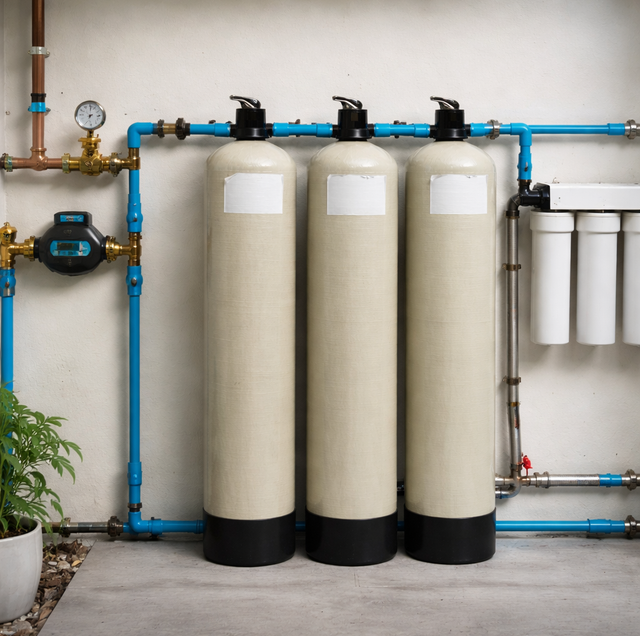
Quick Answer: A whole-house water filter installs on the main water line where water enters your home, so it treats every drop before it reaches any tap, shower, or appliance. It reduces sediment and the taste and smell of chlorine or chloramine, and depending on the media, some other contaminants. It does not soften hard water, remove all dissolved minerals, or make unsafe water safe to drink.
If your water smells like a swimming pool the second you turn on the shower, or grit keeps clogging your faucet aerators, you have probably wondered whether one filter could handle the whole house. It can, but only if you understand what that filter is actually built to do. A whole-house system solves some problems well, ignores others entirely, and gets sold for jobs it was never designed for.
Point of Entry Versus Point of Use
The whole distinction starts with where the filter sits on your plumbing. A whole-house filter is a point-of-entry system: it ties into the main supply line right after the water enters the building, usually near the meter, the pressure regulator, or the water heater. Because everything downstream draws from that single pipe, one filter conditions all the water in the house at once.
A point-of-use filter is the opposite. It treats water at one fixture only. The pitcher in your fridge, the little cartridge under the kitchen sink, the filter screwed onto a single faucet, all of those are point-of-use. They clean the water you drink but do nothing for the shower two rooms away.
That difference decides which problems each one can solve. A bad chlorine smell in the shower, sediment scoring the seals inside your washing machine, or filmy residue on the glass door of the tub are house-wide issues, and a point-of-use device at the kitchen sink never touches them. If your complaint follows you from tap to tap, the point of entry is the level you need to treat.
What a Whole-House Filter Actually Addresses
A point-of-entry system earns its keep on three common problems.
Sediment: Sand, rust flecks, silt, and pipe scale get caught before they reach your fixtures. Sediment is the grit that clogs aerators, wears out valve seats, and leaves a fine layer in the bottom of a glass left to sit.
Chlorine and chloramine: Most municipal water arrives with a disinfectant residual, either chlorine or chloramine, and that is what produces the pool smell and the flat, chemical taste. Carbon media reduces both, which is why filtered water often tastes and smells noticeably cleaner at every tap.
Some other contaminants: Depending on the media you choose, a system can also cut down on certain chemicals, tastes, and odors. Iron and sulfur, the classic sources of orange staining and a rotten-egg smell, usually need a dedicated specialty stage rather than plain carbon.
The Common Stages Inside the System
Most whole-house setups are built as a series of stages, each doing one job as water passes through.
Sediment pre-filter: This coarse first stage catches the visible particles so they do not blind the finer media behind it. It is the stage that fouls fastest and gets changed most often.
Carbon filter: The workhorse for taste and smell. Activated carbon adsorbs chlorine, many organic compounds, and the odors that ride along with them. For chloramine specifically, a catalytic carbon designed for the job works better than standard carbon.
Optional specialty media: If a water test flags iron, manganese, or hydrogen sulfide, an added oxidizing or iron-reducing stage targets those. This is where a generic filter and a purpose-built one diverge.
A separate water softener, if you have hard water: This is the point people get wrong most often. A filter is not a softener. Softening is a different process entirely, an ion exchange that swaps the calcium and magnesium hardness for sodium or potassium. If scale on your fixtures and short water-heater life are your real problem, you need a softener, and it lives alongside the filter, not instead of it.
What It Does Not Do
Being clear about the limits saves you from buying the wrong box.
A basic carbon and sediment filter does not soften water. Hardness minerals pass straight through, so scale keeps building on your heater and showerheads. It also does not remove most dissolved solids: salts, nitrates, fluoride, and many minerals stay in the water because carbon and sediment media are not designed to pull them out.
For true drinking-water purity, reverse osmosis is the tool. An RO system forces water through a semipermeable membrane that strips out dissolved solids down to a very fine level, which is why RO is almost always installed as a point-of-use unit at the kitchen sink rather than for the whole house. Running your entire home through RO wastes water and pressure for a level of purity you only need in a drinking glass.
The most important limit is safety. A whole-house filter does not disinfect biologically unsafe water. If a lab test comes back positive for bacteria, a carbon filter will not fix it, and a fouled cartridge can actually harbor bacteria. Water of unknown safety needs disinfection, typically a UV system or another treatment matched to the test result, not a sediment-and-carbon filter running on faith.
Sizing It to Your Flow Rate
Here is where a lot of otherwise good systems disappoint their owners. Every filter creates some resistance as water pushes through the media. Undersize the system and that resistance shows up as weak pressure the moment two fixtures run at once.
Sizing is a flow-rate question, measured in gallons per minute. A single bathroom has modest peak demand, but a house where a shower, the dishwasher, and an irrigation zone can all run together needs a system rated for that combined flow. Cartridge diameter, port size, and the tank's service flow all factor in. A plumber sizes the unit to your home's peak demand and the incoming line size so the filter cleans the water without becoming a bottleneck. Buy for the busiest moment, not the average one.
Cartridge Systems Versus Tank Systems
Whole-house filters come in two broad builds, and the right one depends on your water and your tolerance for maintenance.
Cartridge systems use replaceable filter elements inside housings. They are compact and simpler to install, and you swap the cartridge when it loads up. The trade-off is ongoing cartridge changes and a flow ceiling set by the cartridge size.
Tank-based backwashing systems hold a bed of media inside a larger tank. Instead of throwing out a cartridge, the system periodically reverses flow to flush trapped debris to the drain and re-fluff the media bed, which extends the media's life. These handle higher flow and heavier sediment loads, but they need a drain connection and a control valve, and the media itself eventually needs replacing on a multi-year cycle.
For light duty and easy access, cartridges win on simplicity. For a busy household or heavier sediment, a backwashing tank usually pays off.
Maintenance Is the Whole Game
A whole-house filter is only as good as its upkeep, and this is not a set-it-and-forget-it appliance. Filter media has a finite capacity. Once it loads up, two bad things happen at once: it stops removing what it used to, and the clogged media restricts flow, which is often the first sign owners notice as a pressure drop.
Cartridges need changing on a schedule tied to your water quality and usage, not a vague someday. A neglected cartridge does more than choke your pressure. A saturated, damp filter that sits too long can become a place for bacteria to grow, which turns a water-cleaning device into a water-fouling one. Backwashing tanks need their cycle set correctly and their media replaced at the end of their service life. Put the change interval on a calendar and hold to it.
A whole-house filter is not a set-it-and-forget-it appliance. Put the cartridge change interval on a calendar tied to your water quality and usage, since a clogged cartridge both stops removing what it used to and restricts flow, which owners often notice first as a pressure drop.
When a Whole-House Filter Makes Sense
The clearest cases are the sensory ones. If your water carries a strong chlorine or chloramine smell and taste at every tap, a carbon-based point-of-entry system is a direct fix. If sediment is clogging aerators and wearing out fixtures throughout the house, a sediment stage handles it. If iron staining or a sulfur smell shows up house-wide, the right specialty media targets that.
What ties all of these together is one step: a water test. A test tells you what is actually in your water: hardness in grains per gallon, the disinfectant type, iron and sulfur levels, and whether there is any bacterial concern. Guessing leads to the wrong equipment, an oversized filter you did not need, a softener you skipped and still need, or a filter installed over a bacteria problem that required disinfection. The test drives the choice, and the choice drives the plumbing.
Because the system ties into your main line and needs a proper bypass so the house can keep running during service, installation is plumber work. A correct install includes shutoffs and a bypass loop so a cartridge change or a repair never means shutting off water to the whole house.
Frequently Asked Questions
It depends on your water and how much you use, but sediment pre-filters commonly run a few months, while carbon stages often last six months to a year. Heavy sediment or high daily use shortens both. Watch for a drop in pressure or the return of taste and smell as your real-world signal to change it, rather than assuming the printed interval fits your water.
No. Scale comes from hardness minerals, and a filter does not remove them. That is a softener's job through ion exchange. A filter and a softener solve different problems and are often installed together: the softener handles hardness and scale, and the filter handles sediment and chlorine taste.
Not reliably on its own. Standard whole-house carbon is built for chlorine, taste, and odor, not for lead or the fluorinated compounds known as PFAS. Removing those takes media certified for that specific contaminant, and lead is frequently addressed at the tap with a certified point-of-use filter instead. A lab test showing the specific contaminant should guide the media selection.
The cartridge changes, yes. The initial install, generally not, because it cuts into the main supply line and needs a bypass, proper shutoffs, and correct sizing to avoid a pressure drop. A mistake at the main line can leave you without water to the whole house, so the tie-in is the part worth leaving to a plumber even if you handle upkeep yourself.
A correctly sized one should not noticeably drop it. Pressure loss happens when the system is undersized for the home's peak flow or when a neglected cartridge clogs and restricts it. Sizing to your gallons-per-minute demand at installation prevents the first, and staying on a change schedule prevents the second.
A water test answers it. Hardness measured in grains per gallon points to a softener, chlorine taste and sediment point to a filter, and a demand for very pure drinking water points to point-of-use reverse osmosis. Many homes end up with a combination, and a positive bacteria result changes the plan entirely by requiring disinfection such as UV rather than any of the three.
Book a water test and system sizing — get the right filter, softener, or RO matched to what is actually in your water. Norfleet Family Plumbing serves Mesa, Chandler, and Gilbert. Call (480) 681-1764.
