
Tankless vs Hybrid Water Heater: How to Decide
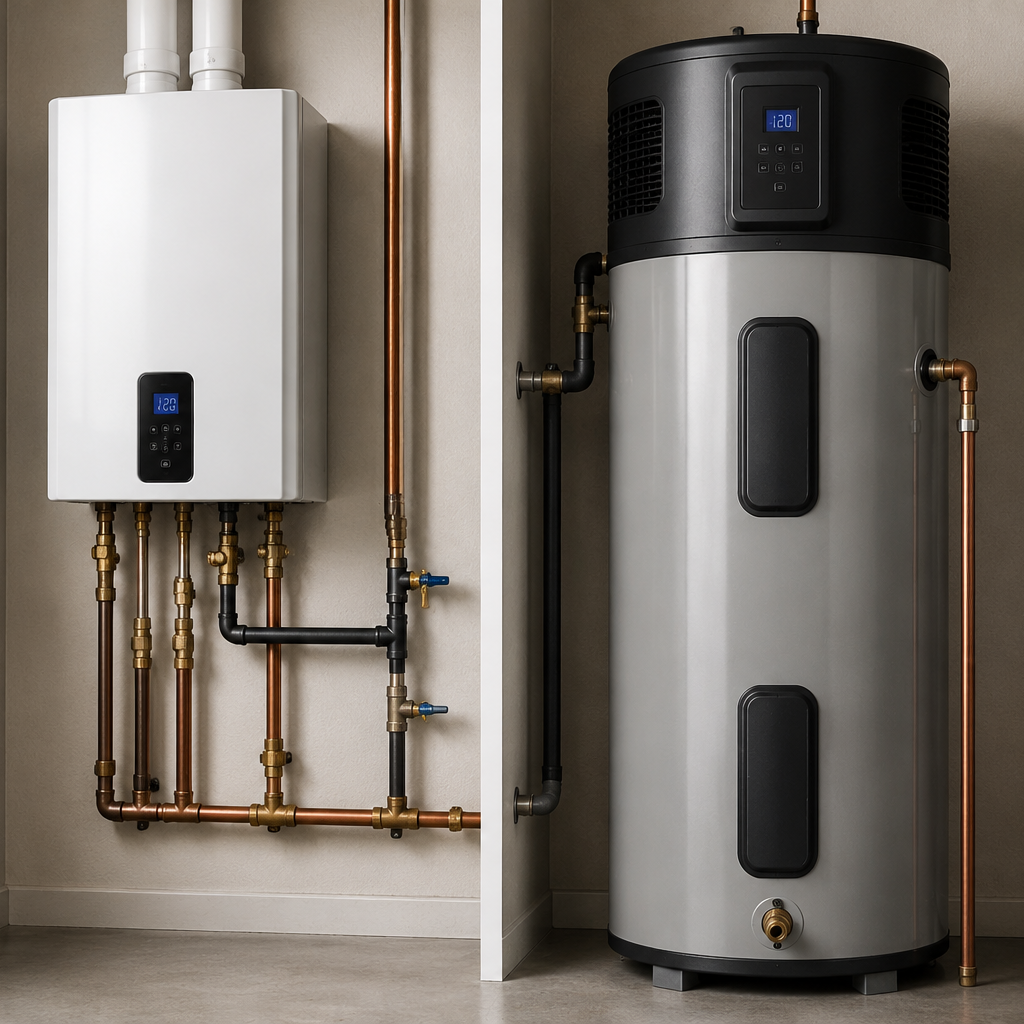
Quick Answer: A tankless water heater heats water on demand with no storage tank, delivering endless hot water and saving space, with a long lifespan but a flow-rate limit and a higher upfront cost. A hybrid (heat-pump) water heater is a tank unit that uses a heat pump to move heat into the water very efficiently, offering strong energy savings and a reserve of stored hot water, but it needs adequate space and air around it, works best in warmer surroundings, and is taller. Tankless suits homes wanting endless hot water and space savings; hybrid suits homes prioritizing energy efficiency with room to install it. The right choice depends on your priorities for efficiency, hot-water supply, space, and budget.
When upgrading a water heater, two energy-efficient options stand out: a tankless water heater and a hybrid (heat-pump) water heater. Both are big steps up from a standard tank in efficiency, but they work very differently and suit different priorities. Understanding how each operates helps you choose the one that fits your home and what you value most.
How Each One Works
A tankless water heater has no storage tank. When you open a hot tap, water flows through the unit and is heated instantly by a powerful burner or element. It heats only what you use, only when you use it, which eliminates the standby energy losses of keeping a tank of water hot.
A hybrid water heater is a tank-style unit with a built-in heat pump. Instead of generating heat directly, the heat pump pulls heat from the surrounding air and transfers it into the water — a very efficient process, since moving heat uses far less energy than creating it. It stores hot water in a tank like a conventional heater, but uses much less energy to do so. So the core difference is on-demand heating with no tank (tankless) versus highly efficient heat-pump heating with a storage tank (hybrid).
Hot Water Supply
The two handle the hot water supply differently. A tankless unit provides endless hot water — it heats continuously as water flows, so you won't run out during a long shower. Its limit is flow rate: it can only heat so many gallons per minute, so running several hot draws at once can strain it.
A hybrid unit stores hot water in its tank, so it has a reserve ready for simultaneous demand like a regular tank heater, but it can run out if that reserve is depleted faster than the heat pump recovers it. So, tankless offers a continuous, never-ending supply with a flow ceiling, while hybrid offers a stored reserve good for bursts but finite. Your usage pattern — long single showers versus many fixtures at once — affects which fits better.
| Factor | Tankless | Hybrid (Heat-Pump) |
|---|---|---|
| Heating | On-demand, no tank | Heat pump into a storage tank |
| Hot water supply | Endless, flow-rate capped | Stored reserve, can deplete |
| Efficiency | High (no standby loss) | Very high (heat-pump) |
| Space | Compact, wall-mounted | Tank-sized, needs air/clearance |
| Install needs | Gas/electrical upgrades possible | Space, air, warmer location |
| Lifespan | Long | Long |
Efficiency and Installation Needs
Both are efficient, but in different ways. A tankless unit saves energy by heating only on demand, avoiding the standby losses of a tank. A hybrid unit is often the more efficient of the two for the energy it uses to heat, because the heat pump moves heat rather than generating it, delivering strong energy savings. The trade-offs are in installation. A tankless unit may need a larger gas line, added venting, or an electrical upgrade to supply its burst of power. A hybrid unit needs adequate space and air circulation around it because the heat pump draws heat from the surrounding air — it works best in a location with enough air volume and warmer ambient temperatures, and these units tend to be taller than a standard tank. So each has specific installation requirements to consider.
Which Should You Choose?
The decision comes down to your priorities. Choose a tankless unit if you want endless hot water, space savings from a compact wall-mounted design, high efficiency, and your home can accommodate any gas or electrical needs. Choose a hybrid unit if top energy efficiency is your priority and you have a suitable installation space with enough air and a warm-enough environment for the heat pump to work well. A household that prizes never running out of hot water and saving space leans toward a tankless unit; one focused on the highest energy efficiency, with room to install it, leans toward a hybrid unit. Both are quality, efficient upgrades over a standard tank — the right one matches your priorities for efficiency, hot-water supply, space, and budget.
Check your installation space before deciding. A hybrid heat-pump unit needs room and air around it to pull heat from, and it's taller than a standard tank, so a cramped closet may not suit it. A tankless unit is compact but may need gas, venting, or electrical upgrades. Matching the unit to your space avoids surprises during installation.
Why Professional Sizing and Installation Matter
Both tankless and hybrid water heaters involve specific sizing and installation considerations, so professional guidance helps you choose and install the right one. Sizing a tankless unit for your peak simultaneous demand, ensuring a hybrid has the space and conditions it needs, and handling the gas, electrical, or venting requirements all matter for the unit to perform. A plumber can assess your home, hot-water usage, installation space, and priorities, then recommend and properly install the heater that fits. Because both are significant upgrades meant to last and save energy for years, getting the choice and installation right ensures you get the efficiency and performance you're paying for.
Frequently Asked Questions
A tankless unit heats water on demand with no storage tank, delivering endless hot water and saving space. A hybrid (heat-pump) unit is a tank-style heater that uses a heat pump to move heat from the surrounding air into the water very efficiently, storing it in a tank. The core difference is on-demand heating with no tank versus highly efficient heat-pump heating with a storage reserve.
Both are far more efficient than a standard tank, but they save energy differently. A tankless unit avoids standby losses by heating only on demand. A hybrid unit is often the more efficient for the energy it uses to heat, because its heat pump moves heat rather than generating it, delivering strong savings. The hybrid's heat-pump efficiency is a key reason homeowners choose it.
It can, because it stores hot water in a tank. The heat pump recovers the water very efficiently, and the stored reserve handles simultaneous demand like a regular tank, but if you deplete the reserve faster than it recovers, you can run short. A tankless unit, by contrast, provides continuous hot water and won't run out, though it has a flow-rate limit.
A hybrid unit needs adequate space and air circulation around it, because the heat pump draws heat from the surrounding air to warm the water. It works best in a location with enough air volume and warmer ambient temperatures, and these units are typically taller than a standard tank. A cramped closet may not provide what the heat pump needs, so the installation space is an important consideration.
It can. A tankless unit may require a larger gas line, additional venting, or an electrical upgrade to deliver the burst of power it needs to heat water instantly. The specific requirements depend on the unit and your home. These installation needs are part of the consideration when choosing tankless, which is why a professional assessment of your home's capacity is worthwhile.
It depends on your priorities. Choose tankless for endless hot water, space savings, and high efficiency if your home can handle its gas or electrical needs. Choose hybrid if getting the highest energy efficiency is your priority and you have a suitable installation space with enough air and a warm environment. A plumber can assess your home and usage to recommend the right fit.
Efficiency and Space Decide It
Tankless and hybrid water heaters are both efficient upgrades, but they suit different priorities: tankless delivers endless hot water and space savings with a flow-rate limit, while a hybrid heat-pump unit offers top energy efficiency and a stored reserve but needs space, air, and a warm location. Match the choice to whether you value endless supply and compact size or maximum efficiency with room to install it, and get it professionally sized and installed.
Choosing between a tankless and hybrid water heater? — Get your home and usage assessed for the right efficient upgrade. Norfleet Family Plumbing serves Mesa and the East Valley. Call (480) 681-1764.
