
Water Heater Leaking From the Bottom? What to Do Now
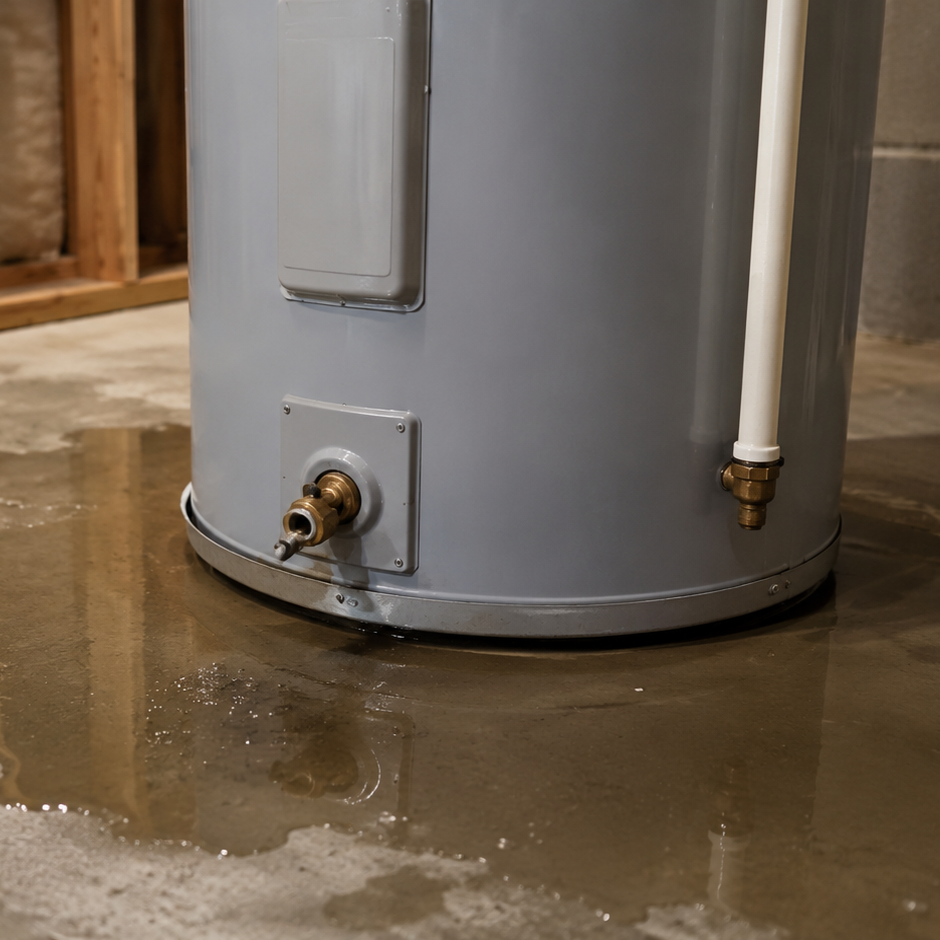
Quick Answer: Cut the power first — flip the breaker for an electric unit or turn a gas heater's dial to "off" or "pilot" — then shut the cold-water valve on top of the tank to stop it refilling. Contain the water and call a plumber. Where the leak is coming from tells you the rest: a leaking valve or fitting is often repairable, but water seeping from the tank body itself means it has corroded through, and that's a replacement.
You walk into the garage or utility closet and see a spreading puddle under the water heater. A leaking tank is one of those problems that goes from "minor" to "flooded floor" faster than you'd think, because there are 40 to 50 gallons in that tank and it keeps refilling itself. The good news is that the first few moves are simple, and once the water's stopped, figuring out whether you need a repair or a new unit is mostly about where the leak is.
Do These Things First
Work in this order — power before water, because electricity or gas plus water is the part that can actually hurt you.
- Cut the power. For an electric heater, switch off the breaker labeled "water heater" at the panel. For a gas heater, turn the control dial on the unit to "off" or "pilot." Don't skip this.
- Shut off the water. Find the cold-water inlet valve on top of the heater — turn the handle clockwise until it stops, or rotate a lever handle so it sits crosswise to the pipe. This stops the tank from refilling and feeding the leak.
- Contain it. Soak up standing water with towels or a wet/dry vacuum and move anything off the floor that water could ruin.
- Drain it only if the leak is bad. If water is pouring out, you can run a garden hose from the drain valve at the base to a floor drain or outside — but the water can be scalding, so take care. For a slow leak, this step can wait for the plumber.
- Call a plumber to diagnose and fix or replace it.
Never cap, plug, or tighten down the temperature-and-pressure (T&P) relief valve to stop it from dripping. That valve is a safety device that releases dangerous pressure buildup — blocking it can turn a leaking water heater into a genuine rupture hazard. If the T&P valve is the source of the leak, that needs a plumber's diagnosis, not a plug.
Where the Leak Is Coming From Tells You Everything
Once the water's off, a little detective work points to whether this is a fix or a replacement. Dry the area, then watch where water reappears.
| Leak source | What it means | Likely outcome |
|---|---|---|
| Drain valve at the base | Valve loose or failed | Often a simple repair |
| A pipe fitting or connection | Loose or corroded joint | Usually repairable |
| T&P relief valve discharge | Excess pressure or temperature | Needs diagnosis; don't cap it |
| Water under a gas unit, intermittent | May be condensation, not a leak | Often harmless; confirm |
| Seeping from the tank body/seam | Inner tank corroded through | Replacement |
The most important distinction is the last one. If the water is weeping from the body or bottom seam of the tank itself — not a valve, not a fitting — the steel tank has rusted through from the inside, and that can't be safely patched. The pressure inside means any patch is a hazard waiting to happen, so a tank-body leak means it's time for a new unit. A manufacturer's own guidance is blunt about this: a leak at the welded tank fitting is not repairable, and the heater should be replaced.
Why Tanks Corrode From the Inside
It helps to know why this happens because it explains both the failure and how to delay the next one. Inside every tank is a sacrificial anode rod — a metal rod designed to corrode in place of the steel tank, drawing the rust to itself. It works until it's used up; then the tank itself starts to rust. Sediment makes it worse: minerals settle to the bottom of the tank, trap heat against the steel, and create hot spots that stress and eventually crack it.
This is where the East Valley's water matters. Mesa-area water is hard — commonly around 12 grains per gallon and ranging higher by zone — and hard water means more sediment and faster scale, which accelerates exactly the bottom-of-tank corrosion that ends a heater's life. It's why tanks here often reach the replacement point sooner than the 10-or-so years a conventional tank typically lasts. Flushing the tank regularly, checking the anode rod every few years, and pairing the heater with a water softener are the moves that stretch its life in this water.
Repair or Replace?
The quick rule: repair if the leak is from a specific component — drain valve, a fitting, sometimes the T&P valve — and the tank body is sound and the unit is reasonably young. Replace if the leak is from the tank body, if the heater is past about 10 years, or if the repair would cost more than half the price of a new unit. A bottom-seam leak on an aging tank checks every box for replacement, and trying to nurse it along usually just buys a flooded floor later. When it's time, water heater service sized to your home — and protected from the hard water that killed the last one — is the lasting fix.
Frequently Asked Questions
It can become one fast, because the tank holds 40 to 50 gallons and keeps refilling until you shut the water off. A slow drip gives you time; a steady flow can flood a room. Either way, cut the power, shut the cold-water inlet valve, contain the water, and call a plumber. A compromised tank can fail more suddenly than it started.
It depends on the source. If it's the drain valve, a fitting, or sometimes the T&P valve, it's often repairable. If water is seeping from the tank body or bottom seam, the inner tank has corroded through, and it can't be safely repaired — that's a replacement. Drying the area and watching where water returns tells you which one you have.
It may be condensation rather than a leak, especially on a gas unit or after cold water has refilled the tank. Condensation usually clears as the water warms and is harmless. But don't assume — dry the area and watch. If water keeps returning and pools at the tank body, treat it as a real leak and shut the unit down.
A conventional tank water heater typically lasts around 10 years, with the broader range often cited at 8 to 12. Hard water and sediment shorten that by accelerating corrosion, which is why East Valley tanks often need replacing sooner. Regular flushing, anode-rod checks, and a water softener help a tank reach the upper end of its lifespan.
Only if the leak is severe. Shutting off the power and the cold-water inlet is the priority; draining is optional and mainly useful when water is pouring out, and you want to stop the flooding before the plumber arrives. If you do drain it, be careful — the water can be hot enough to scald.
The temperature-and-pressure relief valve is a safety device that releases water if pressure or temperature inside the tank climbs too high. If it's discharging, it may be doing its job, or it may be faulty — but either way, capping or plugging it removes the tank's pressure relief and creates a rupture risk. A dripping T&P valve needs a plumber's diagnosis, never a plug.
Stop the Water, Then Read the Leak
A water heater leaking from the bottom is a stay-calm-and-shut-it-down situation: kill the power, close the cold-water valve, contain the mess, and call for help. From there, the leak's location does the diagnosing — a valve or fitting is often a repair, but a weeping tank body is the tank telling you it's done. In this hard water, the smartest fix usually pairs a properly sized new heater with the softening and maintenance that keep the next one from rusting out early.
Water pooling under your heater? — Get it shut down safely, the source diagnosed, and an honest repair-or-replace answer sized for hard water. Norfleet Family Plumbing serves Mesa and the East Valley. Call (480) 681-1764.
