Why Your Water Heater Runs Out of Hot Water Each Morning
Quick Answer: Mornings concentrate hot-water demand — back-to-back showers, plus sinks, sometimes laundry — all within an hour, faster than the tank can reheat between uses. So you "run out" not because the heater is broken but because peak demand outpaces its recovery rate. Sediment buildup (common in hard water), a too-low thermostat, a broken dip tube, or an undersized tank all make the morning crunch worse. Spacing out use, flushing the tank, or upsizing usually solves it.
Almost every household knows the morning hot-water crunch: the first shower is great, the second is okay, and by the third, someone's getting a cold surprise. It feels like the heater is failing, but mornings are simply the hardest test you put it through. Everyone draws hot water in the same short window, and a tank can only reheat so fast. Understanding that peak-demand-versus-recovery balance explains the morning shortage and points to the fix.
Why Mornings Are the Hard Part
A storage water heater holds a fixed amount of hot water and reheats more as you use it — but reheating takes time, measured as its "recovery rate." Mornings stack all your hot-water demand into a narrow window: several showers in a row, plus bathroom sinks, maybe the dishwasher or a load of laundry, all within an hour or so. You draw the tank down faster than it can recover, so you reach the bottom of the usable hot water before the heater can catch up. By midday, with demand spread out, the same heater keeps up fine. So the morning shortage is really a peak-demand problem, not necessarily a broken heater.
What Makes the Morning Crunch Worse
Several issues don't cause the morning peak but make it bite sooner:
Sediment Reducing Capacity
In hard water — common across the East Valley — minerals settle into a sediment layer on the bottom of the tank, taking up space that used to hold hot water. That shrinks your usable capacity, so the morning rush empties the tank even faster. A heater that rumbles or pops during the morning shortage is very likely to have a sediment load.
A Thermostat Set Too Low
The water heater's thermostat sets how hot the stored water gets. If it's set low, there's less very-hot water to stretch by mixing with cold, so the usable supply for back-to-back showers shrinks. A setting that's a bit too low can turn a manageable morning into a cold-shower morning.
A Broken Dip Tube
The dip tube sends incoming cold water to the bottom of the tank, so the hot water at the top stays hot as you draw it. If it cracks or breaks, cold water mixes in near the top and goes straight to your taps, so the water turns lukewarm fast — especially noticeable during heavy morning use. A sudden drop in how long hot water lasts points this way.
An Undersized or Aging Heater
If the tank is simply too small for the household, or old with a slow recovery rate, it can't handle a concentrated morning demand no matter what. A growing family or an added bathroom can outpace a heater that used to be fine.
| What's going on | Effect on the morning | Fix |
|---|---|---|
| Everyone showers at once | Demand outpaces recovery | Space out use; consider upsizing |
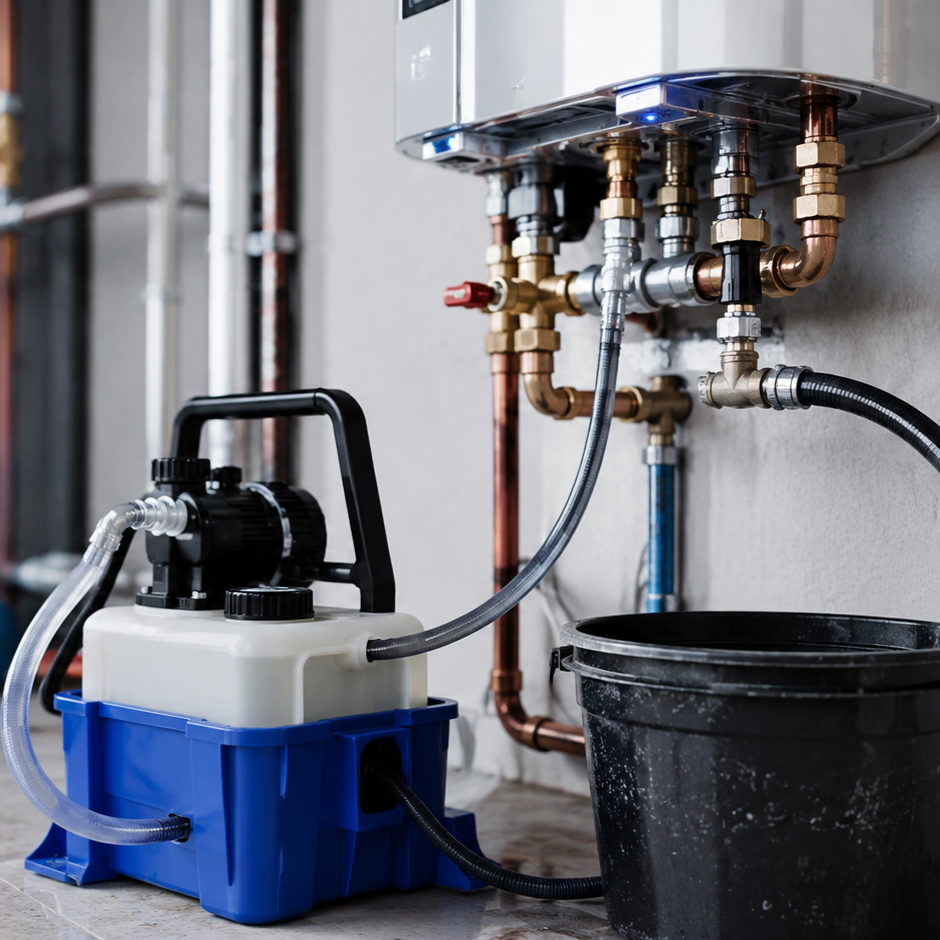
| Sediment buildup | Less stored hot water | Flush the tank; treat hard water |
| Thermostat too low | Smaller usable hot supply | Check/adjust the setting safely |
| Broken dip tube | Water turns lukewarm fast | Replace the dip tube |
| Undersized/aging tank | Can't meet peak demand | Larger tank or tankless |
How to Fix the Morning Shortage
Start with the free fix: spread out the demand. Spacing out showers — leaving a little time between them so the tank can recover — and running laundry or the dishwasher later in the day rather than during the morning rush makes a big difference. If the heater rumbles, flushing out sediment can restore lost capacity, and treating the hard water that causes it keeps it from rebuilding. Check whether the thermostat was turned down, since that shrinks your usable hot water. And if the water turns lukewarm unusually fast, a broken dip tube is worth investigating.
If the household has truly outgrown the tank — more people or bathrooms than it was sized for, and mornings that are always a battle — the lasting fix is a larger tank or a tankless unit that heats water on demand and doesn't run out during back-to-back use. A plumber can confirm if the cause is demand, sediment, a component, or sizing, so you fix the right thing rather than guessing.
Frequently Asked Questions
Because mornings concentrate your hot-water demand — multiple showers plus sinks and appliances all within an hour — faster than the tank can reheat between uses. You hit the bottom of the usable hot water before the heater recovers. Later in the day, with demand spread out, the same heater keeps up fine. The morning shortage is usually a peak-demand issue, sometimes worsened by sediment or a low thermostat.
Yes. In hard water, sediment settles into a layer at the bottom of the tank and takes up space that used to hold hot water, reducing your usable capacity. With less to draw from, the concentrated morning demand empties the tank faster. A heater that rumbles or pops likely has sediment; flushing the tank can restore capacity, and softening the water prevents the buildup from returning.
A thermostat set too low reduces the usable hot water, since there's less very hot water to stretch by mixing with cold. Adjusting it can help, but it should be done carefully — water that's too hot is a scald risk, so many households use a safe setting and address capacity other ways. A plumber can set it appropriately and tell you whether the thermostat is actually the issue.
Spread out the demand: space out showers with a little time between them so the tank recovers, and run laundry and the dishwasher later in the day. Flush the tank if sediment has built up, check the thermostat setting, and look into a broken dip tube if water turns lukewarm fast. If the household has outgrown the tank, a larger or tankless unit is the lasting solution.
If your mornings are consistently a battle and the household has outgrown the current tank, a larger tank or a tankless unit can solve it — tankless heats water on demand and doesn't run out during back-to-back showers the way a tank does. Whether it's the right move depends on your demand and setup. A plumber can assess whether an upgrade is warranted or whether a flush and spacing out use will do.
Mornings Test the Tank — Help It Keep Up
Running out of hot water in the morning isn't usually a broken heater; it's everyone drawing hot water at once, faster than the tank can reheat. Sediment, a low thermostat, or a worn dip tube make it worse, and an undersized tank simply can't keep up. Space out your use, flush the tank, check the thermostat, and if the household has outgrown it, look at a bigger or tankless unit. Match the fix to the cause, and the morning cold-shower surprise goes away.
Tired of cold morning showers? — Get the tank checked, flushed, or right-sized so it keeps up with your mornings. Norfleet Family Plumbing serves Mesa and the East Valley. Call (480) 681-1764.
