What Size Water Heater Do You Need? Avoid Cold Showers
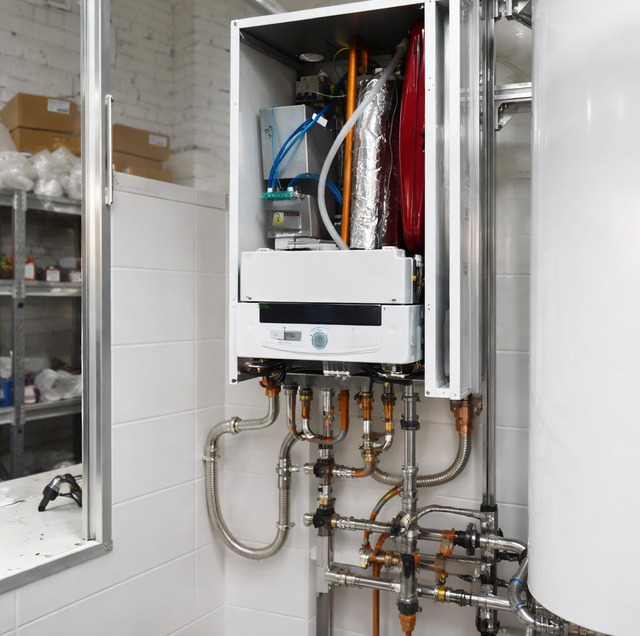
Quick Answer: Water heater size is set by peak demand, not by household headcount alone. A storage tank is matched to its first-hour rating (FHR), the gallons of hot water it can deliver in one busy hour. A tankless unit is matched to flow rate in gallons per minute (GPM), and the temperature rise it must produce from incoming to target water temperature. Get the peak-demand number right first, then pick the system that meets it.
Sizing a water heater is one of those decisions people get wrong in opposite directions. Some homes end up with a unit too small to cover a busy morning, and others pay for capacity they never touch. The right size is not the biggest one on the shelf, and it is not simply "one gallon per person." It comes down to a single question worth answering carefully before you shop: how much hot water does your household actually pull at its busiest moment?
Start With Peak Demand, Not Total Use
Your family might use 60 gallons of hot water across a full day, but that number tells you almost nothing about what size heater you need. What matters is the heaviest single stretch, usually a weekday morning when showers, a shaving sink, and maybe a dishwasher or washing machine all want hot water inside the same 30 to 60 minutes. That crunch is the peak, and the heater has to cover it without falling behind.
A useful comparison: sizing by daily total instead of peak is like buying a car by average speed instead of the horsepower you need for the on-ramp. The average is comfortable; the merge is where things go wrong. A heater that keeps up over a lazy afternoon can still leave the last person in a cold shower at 7 a.m.
Peak demand is a moving target, too. Add a teenager, a second bathroom, or a soaking tub, and the busiest hour grows. Sizing works best when it reflects the household you will have for the next decade, not just today's routine.
How A Storage Tank Is Sized
A conventional tank heats and holds water so a reserve is always waiting. Two numbers describe it, and one matters far more than the other.
Capacity Is The Headline, FHR Is The Real Story: Raw gallon capacity, 40, 50, 65, 80, gets printed on the box and quoted first, but it can mislead you. First-hour rating is the number to weigh. FHR measures how much hot water the tank can deliver during one hour of heavy use, combining the stored volume with how fast the burner or element reheats incoming cold water.
That reheat speed is called the recovery rate, and it separates two tanks of identical size. Gas tanks generally recover faster than electric, which is why a smaller gas tank often serves a busy house that a same-size electric tank would struggle with. When you compare units, line up the FHR against your peak-hour demand, and treat capacity as a secondary check.
When comparing storage tanks, line up the first-hour rating against your peak-hour demand and treat raw gallon capacity as a secondary check. A 40-gallon gas unit with a strong burner can post a higher first-hour rating than a 50-gallon electric one that recovers slowly, because the gas model reheats faster while you draw.
A General Gallon Guide By Household Size: As a rough starting point before a real calculation, one to two people are often served by a 30 to 40-gallon tank, three to four people by a 40 to 50-gallon tank, and five or more by a 50 to 80-gallon tank or a high-recovery model. Read these as conversation-starters, not answers. A two-person home with a rain-head shower and a garden tub can out-demand a four-person home with quick, efficient fixtures. Habits and fixtures move the line.
How A Tankless Unit Is Sized
A tankless (on-demand) heater holds no reserve. It fires only when a hot tap opens and heats water as it flows through, so it is sized on two things at once: how much water moves through it per minute, and how far it must raise that water's temperature.
Flow Rate: Add Up Simultaneous Fixtures: Flow is measured in gallons per minute. Every fixture has a rough GPM: a shower might run 2 to 2.5 GPM, a kitchen faucet around 1.5, a bathroom faucet closer to 1. To size a tankless unit, you add the GPM of the fixtures likely to run at the same time during your peak. Two showers plus a kitchen tap can land near 6 GPM, and the unit must deliver that flow while still hot, or the water arrives lukewarm.
Temperature Rise: The Number People Forget: Flow is only half the equation. The other half is temperature rise, the difference between the water entering your home and the temperature you want at the tap. Target most homes for roughly 120 degrees Fahrenheit at the fixture. If incoming water arrives at 70 degrees, the unit must add 50 degrees of rise; if it arrives at 50 degrees, that jumps to 70 degrees of rise, and the same unit can push fewer gallons per minute to do the harder work.
That trade-off is why incoming water temperature is central to tankless sizing, and it varies through the year rather than staying fixed. Ground and supply water tends to run warmer in the hotter months and cooler in the winter, so the same tankless heater delivers a bit more flow when the incoming water is warm and less when it is cold. A unit sized only for the warm-water season can disappoint on the coldest incoming days, so a sound calculation uses the low end of your incoming range, not the average.
Signs A Heater Is Undersized
An undersized unit announces itself in familiar ways:
- Running out mid-shower: Hot turns tepid partway through a single shower, meaning demand outpaced either the tank's reserve or the tankless unit's flow-and-rise capacity.
- No hot water for a second shower: The first shower drains a tank, and the second person waits on a slow recovery. A tank that cannot keep two back-to-back showers hot is under-rated for the household.
- Appliances competing with taps: The shower cools the moment the washing machine or dishwasher fills, a sign the peak draw exceeds what the unit delivers.
- A tankless unit dropping to lukewarm under load: When too many fixtures open at once, an undersized tankless heater cannot hold temperature across the combined flow.
Why Oversizing Is Not The Safe Answer
It is tempting to buy big and stop worrying, but oversizing carries its own cost, mostly with tanks. A storage tank loses heat through its walls around the clock even when no one draws water. That standby loss means a larger-than-needed tank keeps reheating gallons nobody uses, which shows up on the utility bill month after month. A right-sized tank still has standby loss, but you are not paying to keep surplus gallons hot for no reason.
Oversizing a tankless unit is less punishing on standby, since it heats only on demand, but a wildly oversized model may still demand a larger gas supply or venting than the home has. Bigger is not automatically better in either system. Matched-to-demand is the goal.
How Fixtures And Habits Change The Math
Two identical floor plans can need different heaters because the people and hardware inside differ. A soaking tub can hold 40 to 80 gallons and draws hot water hard and fast, spiking peak demand well beyond a standard shower. Older, high-flow showerheads pull more GPM than newer low-flow models, so a fixture upgrade can shrink the heater a home needs. Large-capacity washing machines, back-to-back showers before work, and a habit of running the dishwasher during the morning rush all push the peak higher.
Water quality matters over time, too. Hard water leaves scale inside a tank and on tankless heat exchangers, and heavy scale steals capacity and slows recovery, so a heater in a hard-water home can behave as if it were a size smaller after a few years without maintenance. Sizing that ignores water conditions and future household changes tends to come up short.
Why This Is A Plumber's Calculation
Proper sizing is a load calculation, not a guess from the side of the box. For a tank, a plumber works out your peak-hour demand and matches it to a unit's first-hour rating and recovery rate. For a tankless unit, they total your simultaneous fixture GPM and calculate the temperature rise using the low end of your incoming water range, then confirm the gas line, meter capacity, or electrical service can actually feed the unit you need.
Sizing is also inseparable from safe installation, which is licensed work for good reason. Electric models involve dedicated circuits sized to the unit. An undersized unit leaves you cold; a wrong-fuel or improperly vented one is a hazard. A licensed plumber sizes and installs the unit so it meets your peak demand and vents and drains as it should.
Gas models involve fuel connections and venting that, done wrong, can leak carbon monoxide indoors, and water much above 120 degrees can burn skin quickly. Every water heater needs a working T&P relief valve and correct clearances, which is part of why sizing and installation are licensed work.
Frequently Asked Questions
Not from an empty reserve, since it has none, but it can run short on flow. If the combined GPM of open fixtures exceeds the unit's rated flow at your required temperature rise, it drops to lukewarm rather than going cold, and it recovers the instant demand falls back within range. This is a capacity limit, not the "empty tank" a storage unit hits.
Around 120 degrees Fahrenheit suits most homes: hot enough to limit bacterial growth in the tank and cover normal use, low enough to reduce scald risk. Every 10-degree drop below that also trims standby energy loss on a tank. Homes with immunocompromised residents sometimes store hotter and add a mixing valve to temper the water back down at the tap.
A storage tank commonly lasts 8 to 12 years, and a tankless unit often 20 or more, though hard water can cut both short by driving scale. Size itself does not set lifespan, but a chronically undersized unit that runs at full output constantly wears faster than one comfortably matched to demand.
Not always. A larger tank is taller and wider and may not clear the existing alcove, and it can demand a bigger gas line or a heavier electric circuit than the old unit used. Space, venting, and fuel supply all have to be checked before assuming a same-spot swap to a larger size will fit and function.
First-hour rating is the gallons of hot water a tank delivers across one hour starting full, and it appears on the yellow EnergyGuide label and the spec sheet, not usually on the front of the box. It bundles stored volume with recovery, which is why two tanks of the same gallon size can carry different FHR numbers.
A recirculation pump keeps hot water primed at distant fixtures so you wait less, but it does not add capacity, and on a tank it can slightly raise standby loss because water is moving and shedding heat more often. It solves wait time and waste, not an undersized-heater problem, so size the unit to peak demand first and treat recirculation as a separate comfort choice.
Book a water heater sizing visit — get a unit matched to your home's real peak demand, sized and installed to code. Norfleet Family Plumbing serves Mesa, Chandler, and Gilbert. Call (480) 681-1764.
